




















Need an execution contractor?
Controlled demolition in Dubai and across the UAE.
This article explains the planning question. For scope review, method selection and a site-specific technical proposal, continue to Arasar's primary service page.
A removal plan the next team can verify
A useful demolition brief separates the asset that stays from the material that goes. It also identifies the information still missing: drawings, concealed services, access constraints or the final condition required by the following contractor. Those decisions matter before a particular machine is selected.
| Published project | Context documented | Question for a similar job |
|---|---|---|
| Dubai Hills | Selective villa alteration, roof-level core-drilling photography and removed-material handling | Which parts of the villa remain, and what is the exact removal boundary? |
| Jumeirah Golf Estates | Structural modification with photographs of concrete-section handling beside a villa | How will cutting, lifting and transport form one agreed package? |
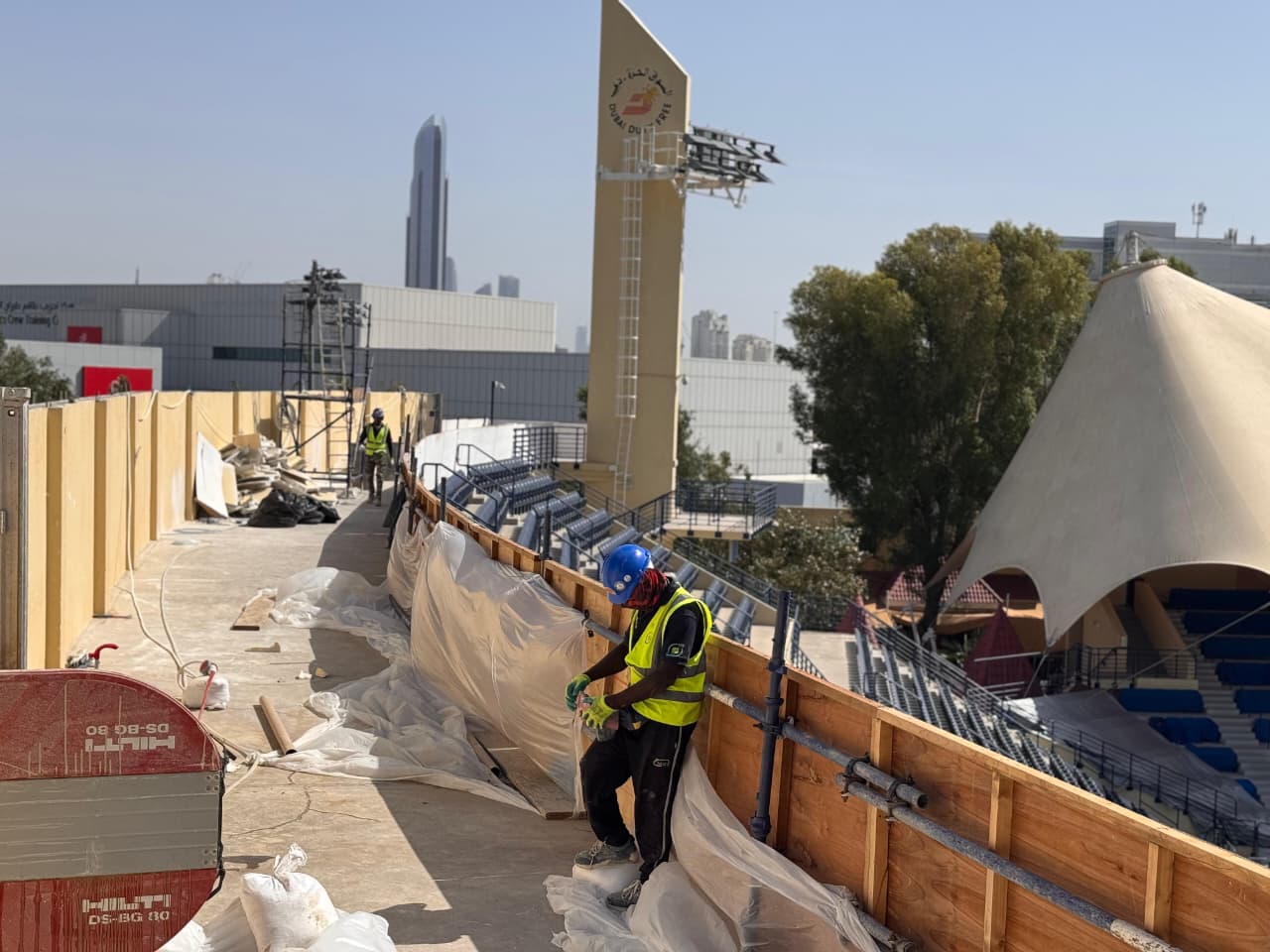
| Dubai Duty Free Tennis Stadium | Structural alterations, spectator seating and a narrow scaffolded work area | What access, retained areas and working windows must the proposal address? |
Make investigation answer the proposed intervention
A scanning instruction should identify the proposed opening or drilling area and the question to resolve. Hilti's published radar-system documentation illustrates how detected objects can be marked and survey data exported for reporting. A manufacturer's capability is not a guarantee for every slab or proof that a particular scanner was used on one of our pictured jobs.
Ask the survey team to explain its findings, reference points and limitations before those records are used for the next decision. Arasar's scanning and reporting guides distinguish detected depth, element thickness and unresolved conditions.
Connect cutting, breaking and removal logistics
The Jumeirah Golf Estates photographs show a removed concrete section, lifting chains and the receiving vehicle together. The cutting operation is therefore only part of the question a client needs to price. Section handling, loading access and the retained structure belong in the same scope discussion.
Our separate crane-lift clip shows an element being lifted clear of a scaffolded structure. It illustrates one work stage; it is not assigned to Jumeirah Golf Estates, and it does not establish a lifted weight, total quantity or project duration. Robotics is another method option, to be assessed against access and the actual work face rather than added as a blanket promise.
Make digital engineering and material records useful
For procurement, a digital model or dashboard should have a defined deliverable and an identified user. Start with the records the following team actually needs: marked removal limits, the agreed drawing revision, unresolved survey questions, photographs of relevant stages and the condition expected at handover. Do not assume that a rendering or a tool name proves the method is ready.
The same principle applies to material recovery. Agree who records removed materials, transport and destination, and what evidence the client will receive. We do not derive recycling percentages or tonnages for these Dubai projects from photographs.
- Identify who owns each drawing, survey and approval input
- Separate confirmed information from questions needing a site review
- Define completion records and material responsibilities before comparing quotations
Turn the examples into your project brief
Send the location, marked drawings, current photographs, retained areas and required handover condition. For an occupied property or venue, add the access and operating constraints. Arasar can then review a defined intervention rather than respond to an undefined request for 'demolition'.
This guide draws on the linked Arasar records and technical reference. The project photographs show selected stages; they are not a substitute for the structural design, site-specific method or appointed team's approval for another building.
Frequently asked questions
01Does newer equipment remove the need for structural review?
No. Investigation, cutting, breaking and handling equipment must fit an agreed intervention. The responsible project team still needs to resolve the retained structure, support, services and approvals.
02Are the project photographs complete before-and-after records?
No. The linked Arasar records identify the visible work stages and their limits. Quantities, durations and completion outcomes should not be invented from photographs.
03What should I send for a similar Dubai alteration?
Provide the location, drawings, photographs, proposed removal boundary, retained areas, access and desired handover condition. Identify information still awaiting verification.
Technical and regulatory references
Requirements remain project- and authority-specific. These public sources support the technical or regulatory points used in this guide.
Project note
Guidance is the starting point. The site determines the method.
Every structure, access route and operating environment is different. Final engineering, approvals and controls should be based on verified project information and a site-specific assessment.