



















Need an execution contractor?
Controlled demolition in Dubai and across the UAE.
This article explains the planning question. For scope review, method selection and a site-specific technical proposal, continue to Arasar's primary service page.
1–2. Digital engineering and subsurface scanning
Reality capture, structural modelling and sequence planning expose access and stability issues before mobilisation. Concrete scanning then adds local information about reinforcement, post-tensioning and concealed services at the exact intervention zone.
- Point clouds and measured site models
- Sequence visualisation and temporary works coordination
- GPR and non-destructive investigation
- Digitally referenced set-out and findings
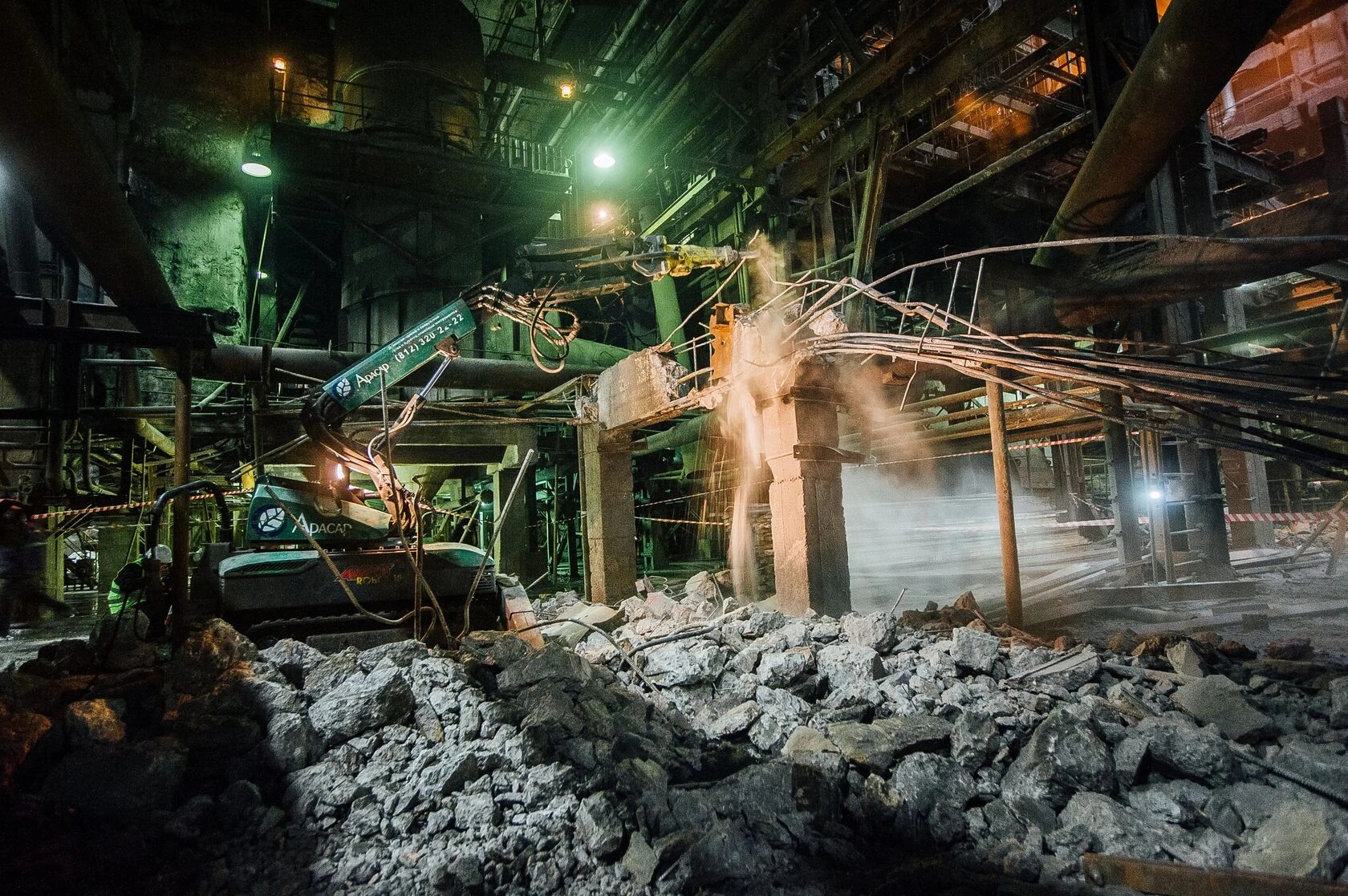
3–4. Robotic demolition and precision cutting
Remote-controlled robots reduce operator exposure in breaking zones, while diamond wire, wall and floor saws create controlled boundaries with less vibration. Used together, they can separate retained and removed areas with greater accuracy.
- Compact remote crushers and breakers
- Wire sawing for thick or irregular sections
- Core drilling for service and lifting openings
- Tool changes matched to changing material conditions
5. Monitoring and material intelligence
Vibration, movement, dust and production data help teams verify that conditions remain within the agreed method. Material quantities and destinations can also be tracked, supporting recycling and more credible circular-demolition reporting.
Project note
Guidance is the starting point. The site determines the method.
Every structure, access route and operating environment is different. Final engineering, approvals and controls should be based on verified project information and a site-specific assessment.