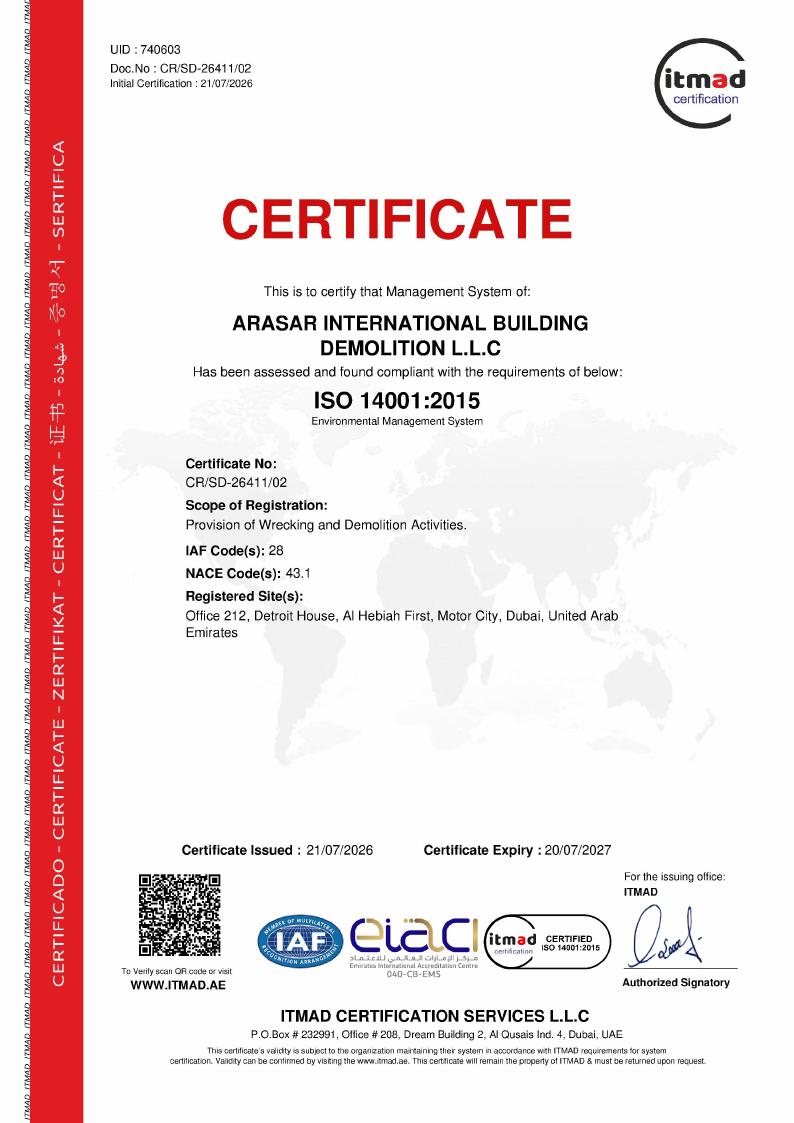
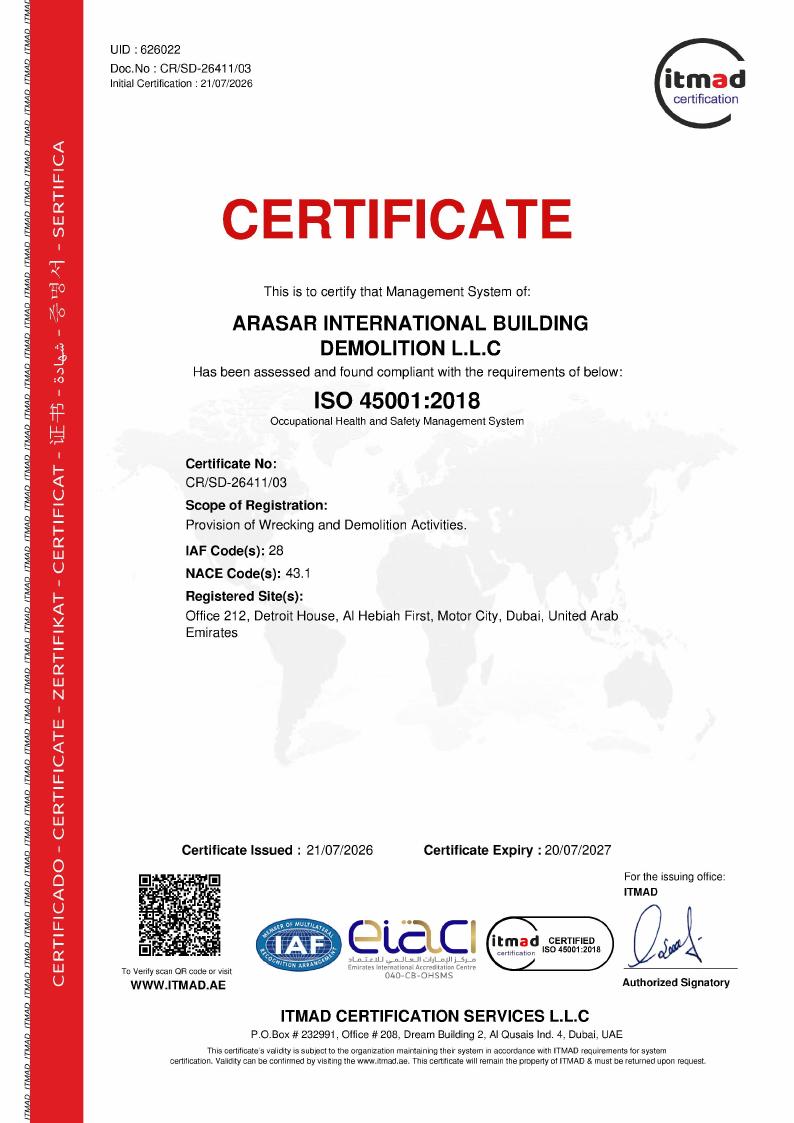
ITMAD and EIAC marks are displayed together, at equal visual weight and without altered proportions, in accordance with the issuer's rules for web use.
Industrial demolition · UAE
Industrial demolition for complex facilities across the UAE.
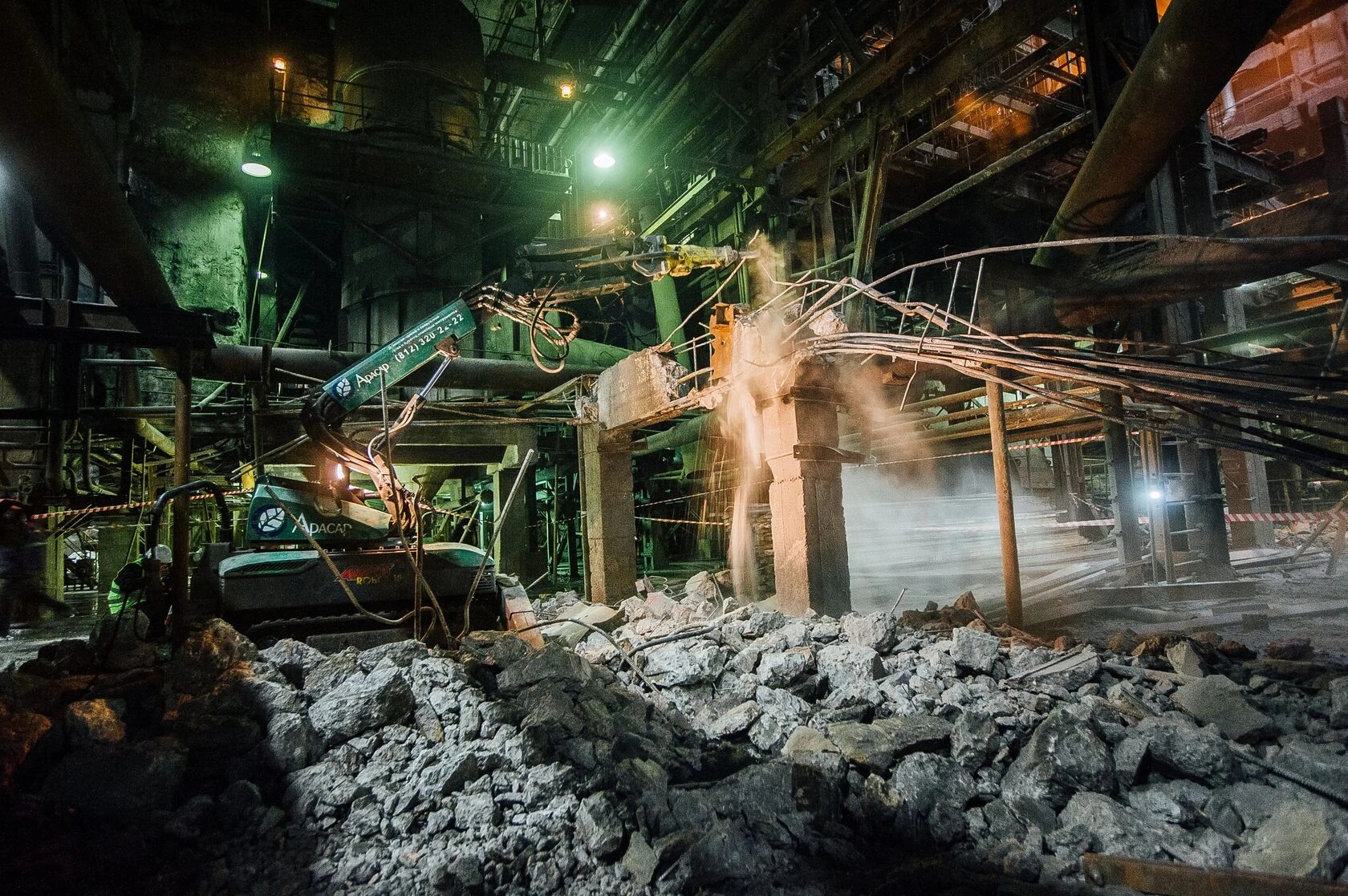
Arasar delivers industrial demolition for factories, plants, process structures and large production assets across the UAE. Structural dismantling, equipment interfaces, isolations, heavy lifting, material recovery and any retained operations are coordinated within one site-specific programme.
Industrial demolition developed around the operating envelope.
Industrial assets combine structures, machinery, pipework, cable routes, tanks and process history. Demolition cannot begin safely until ownership of isolation, residual hazards, access and retained systems is clear between the client and specialist contractors.
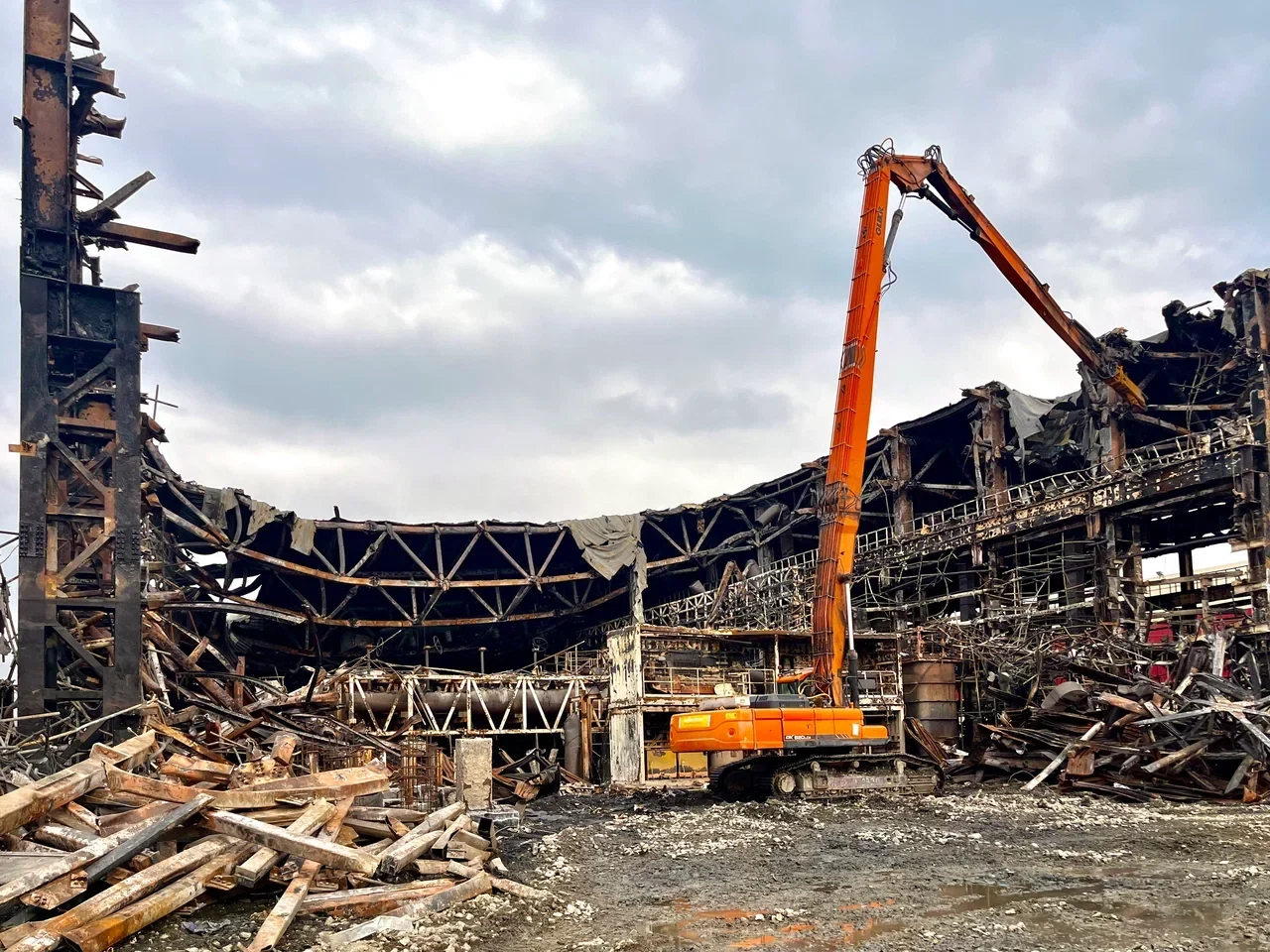
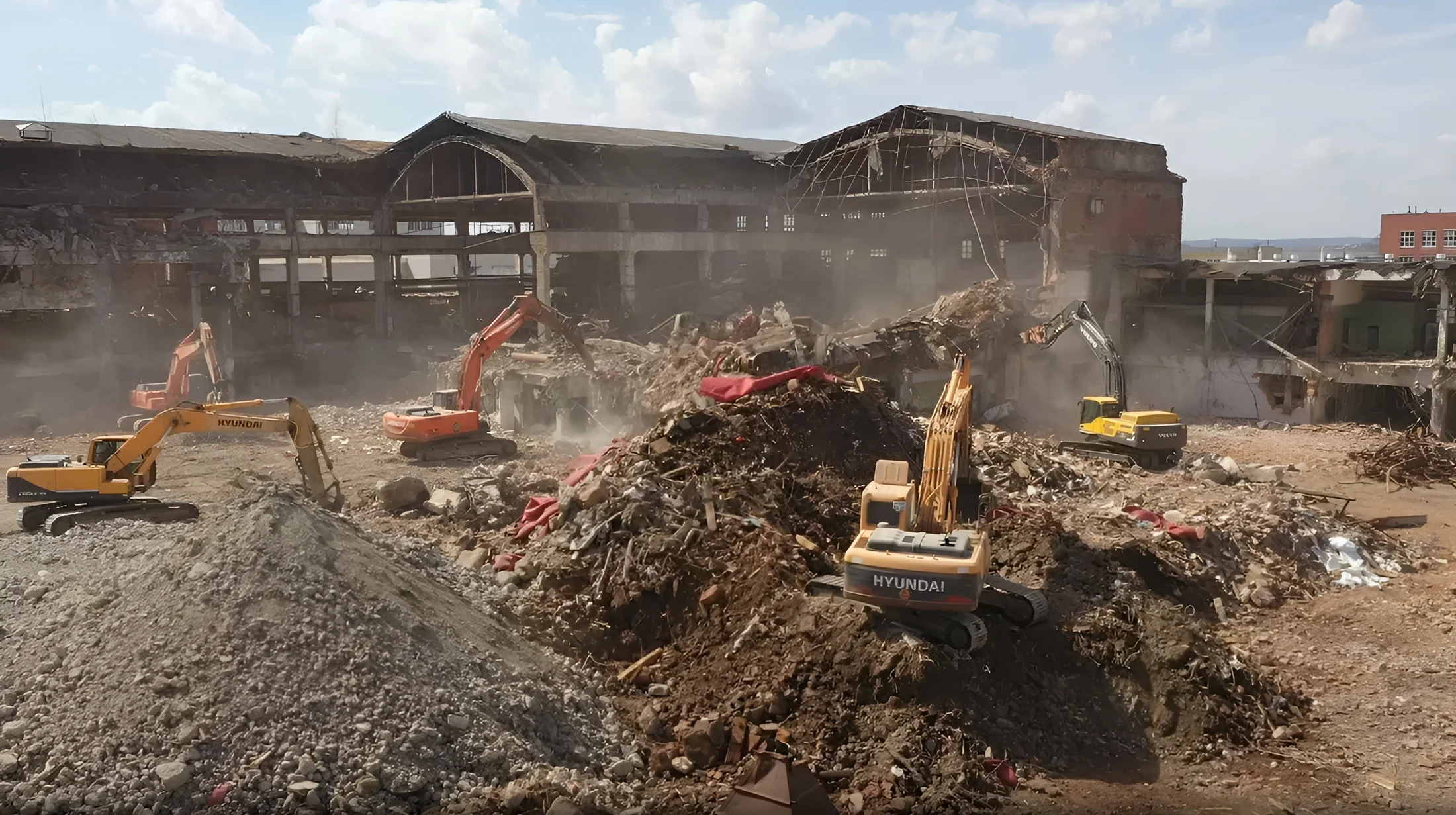
Arasar develops the structural and demolition sequence around verified boundaries. Large steel and concrete elements may be cut and lifted, reduced mechanically or dismantled in sections while material flows and operational interfaces remain controlled.
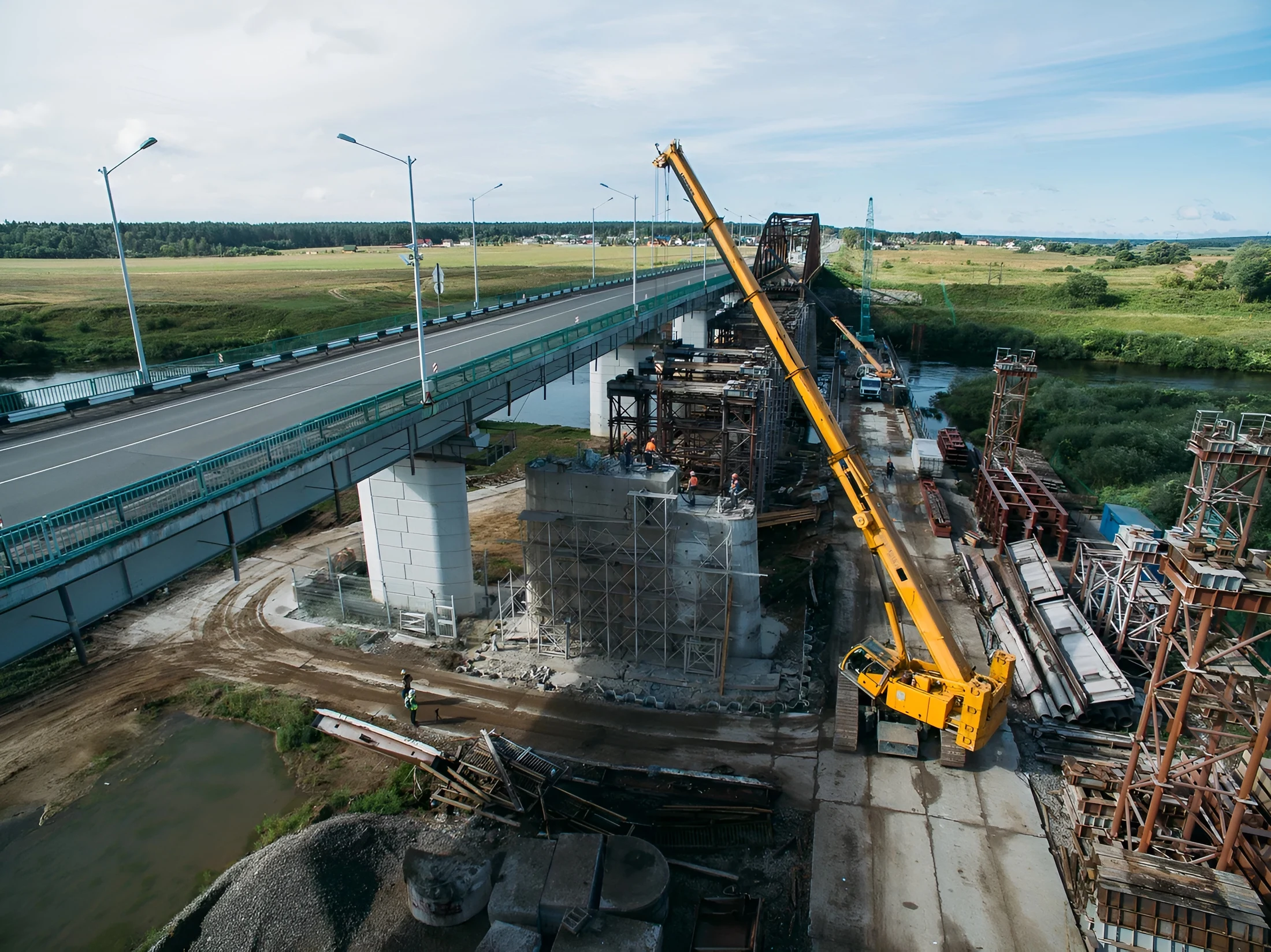
10,000 tsteel dismantled on a major group industrial project
Typical applications
01Factories and production buildings02Process structures and equipment supports03Industrial steel and reinforced concrete04Partial demolition within retained facilities
Plants and factories · UAE
Industrial demolition begins at the interface register.
Structures, process equipment, isolations, retained systems, lifting and material recovery must be visible within one phased programme before demolition affects an industrial asset.
Verified boundaries
Released areas, retained operations, client isolations and specialist responsibilities are defined before dismantling.
Heavy methods
Cutting, lifting, mechanical demolition and specialist attachments are combined around large industrial elements.
Recovery objectives
The sequence identifies equipment, steel, concrete and other material streams around the client’s intended outcome.
Original UAE project photography is shown alongside clearly labelled wider group experience where it demonstrates the relevant scale or dismantling method.
The strongest industrial method makes every isolation, retained service, structural release and material destination visible to the project team.
01
Interface control
Client isolations, retained systems, demolition boundaries and specialist responsibilities are made explicit before structural work.
02
Heavy capability
Cutting, lifting, mechanical demolition and specialist attachments are combined around large industrial components and access limits.
03
Recovery planning
Steel, equipment, concrete and other streams are separated around the client’s recovery, recycling and clearance objectives.
Industrial workflow
Verify the boundary before releasing the structure.
Demolition advances only after the responsible parties have cleared each system, zone and structural stage.
01
Define boundaries
Confirm retained operations, isolation ownership, process history, structures, equipment and demolition limits.
02
Engineer the programme
Set dismantling zones, lifting, temporary works, plant positions, monitoring and material routes.
03
Release controlled areas
Verify isolations and project hold points before structural or equipment-related demolition begins.
04
Dismantle and recover
Progress through defined systems and structures while maintaining clear material and handover records.
Typical deliverables
A controlled record of every interface.
Industrial demolition boundary plan
Dismantling and lifting sequence
Isolation-interface register
Material recovery and handover records
Technical questions
Before mobilisation.
Final methods and capacities are confirmed after a project-specific site assessment.
01What makes industrial demolition different?+
Industrial sites combine structures with equipment, services, process history, residual hazards, restricted access and operational interfaces. These dependencies must be verified before dismantling.
02Can part of a factory remain operational?+
Where systems and structures can be safely separated, demolition may be phased around retained operations. Isolation, fire and emergency routes, dust, vibration, traffic and shared services require detailed coordination.
03Who manages hazardous materials?+
Hazard identification, testing, removal and disposal responsibilities must be assigned to appropriately authorised parties before demolition affects the relevant area. Arasar coordinates its demolition method with those verified boundaries.
04Can industrial steel and equipment be recovered?+
Potentially. Recovery depends on condition, contamination, connections, lifting access, client requirements and whether dismantling for reuse can be completed safely and commercially.














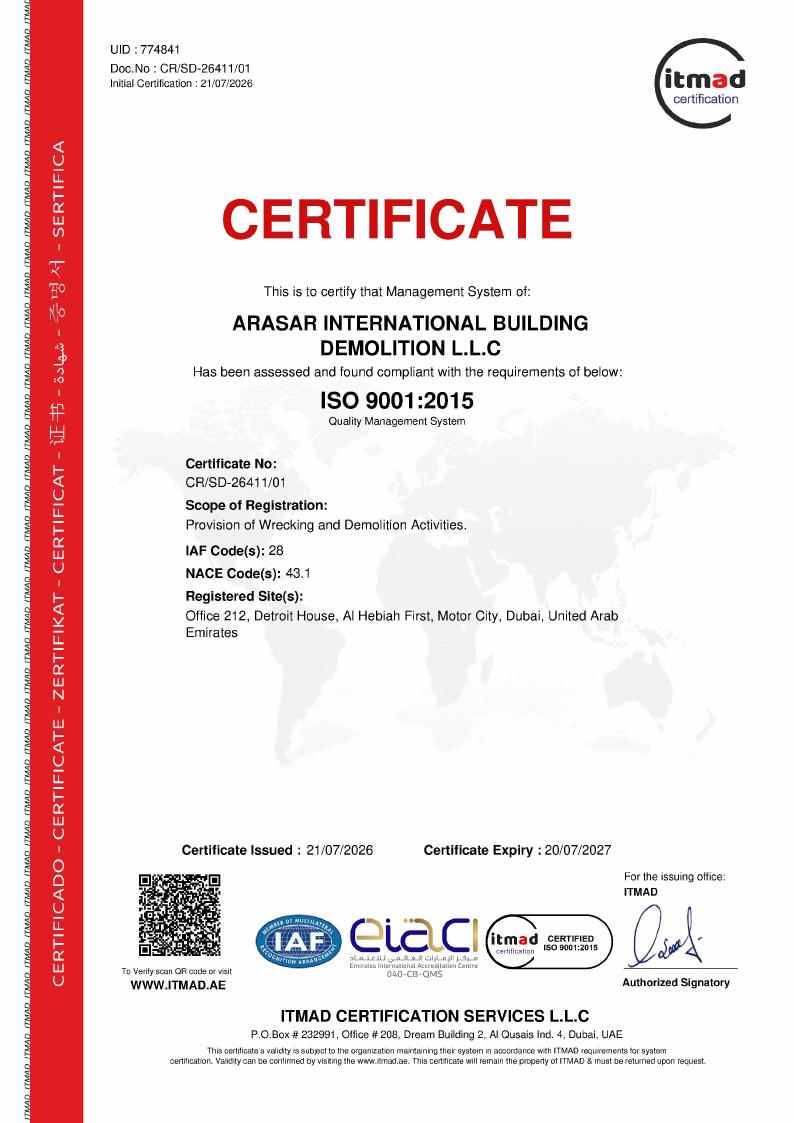 Full certificate