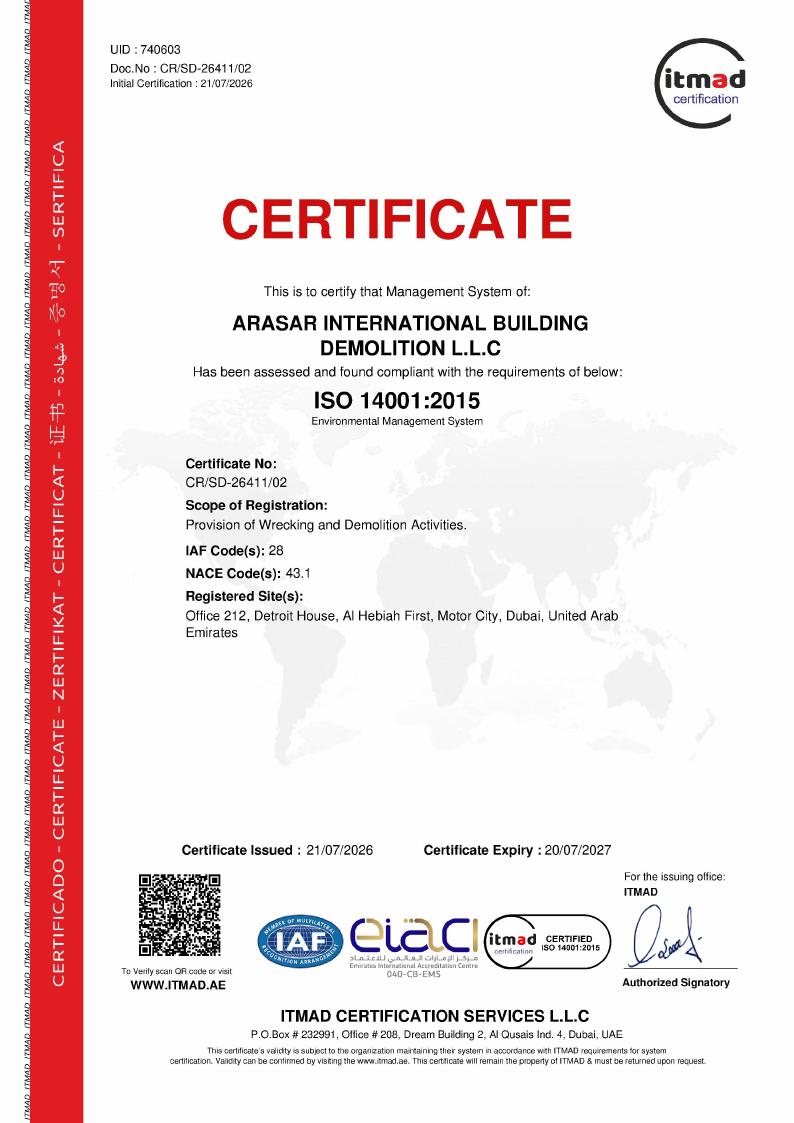
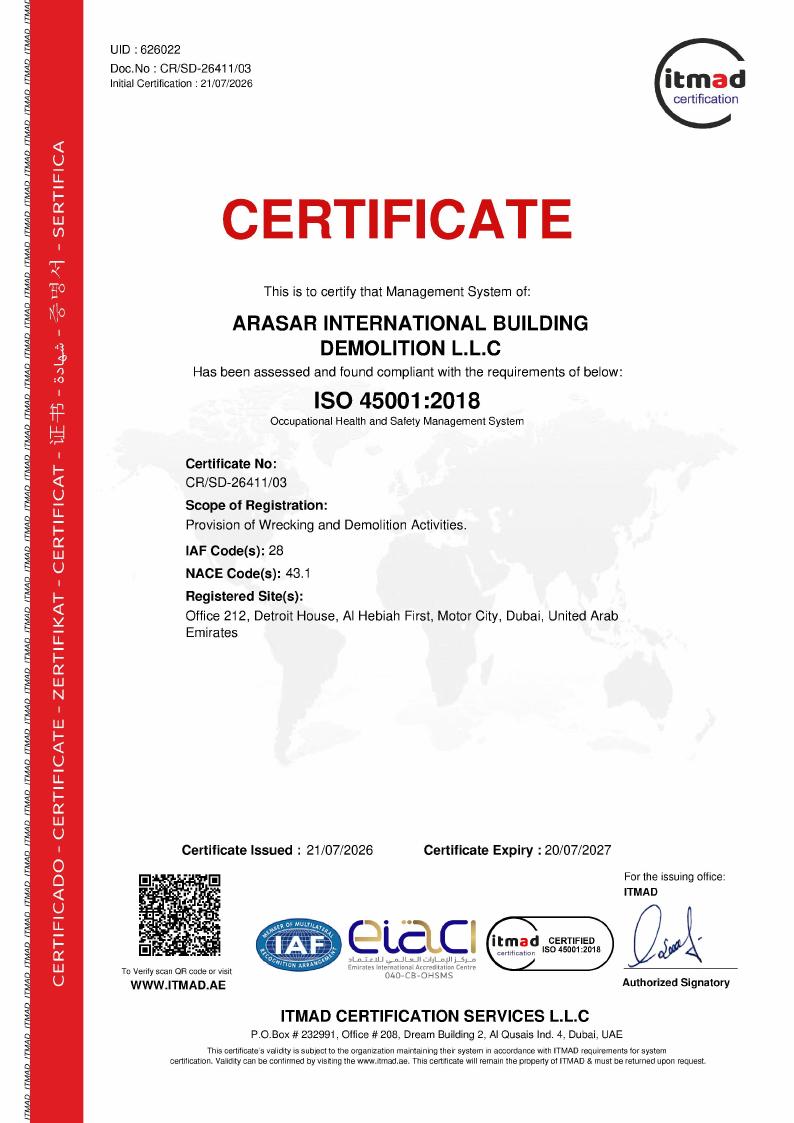
ITMAD and EIAC marks are displayed together, at equal visual weight and without altered proportions, in accordance with the issuer's rules for web use.
REMOTEPOWERCONTROL
Fleet update · Dubai 2026
New demolition robots for robotic demolition in Dubai and the UAE.
A new generation of remote-controlled demolition capability for confined, sensitive and high-risk concrete work across Dubai and the Emirates.
More distance from risk. More control at the workface.
Robotic demolition does not replace engineering. It gives the engineered sequence a compact, remotely operated carrier capable of placing hydraulic force precisely where the structure needs to change.
01 · Remote operation
Power without proximity.
The operator controls the machine from outside the immediate breaking and falling-material zone, with a clear view of the work and the exclusion area.
02 · Compact access
Built for constrained sites.
Tracked robotic platforms can be considered where conventional excavators are too large, including plant rooms, basements and interior refurbishment zones.
03 · Precision control
Force placed exactly where needed.
Hydraulic movement and remote visibility support selective breaking around retained structure, services and sensitive interfaces.
04 · Tool ecosystem
One carrier. Multiple tasks.
Breakers, concrete crushers, grapples and buckets allow the platform to follow the engineered sequence instead of forcing one tool onto every condition.
Real machines · Real work
Two scales. One controlled system.
The new fleet expands the range between compact access and high-output breaking. Final machine class is selected only after the site, structure and load path are understood.
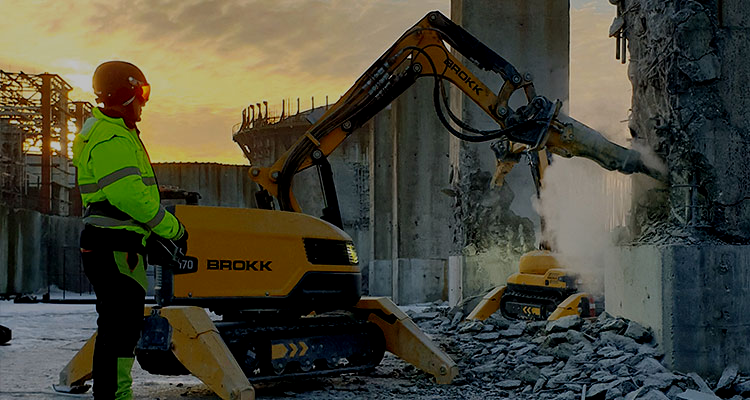
Compact access class
Configuration A
Precision inside the building.
Compact tracked geometry for interior routes, selective walls, plant rooms and spaces where conventional machines cannot approach the workface.
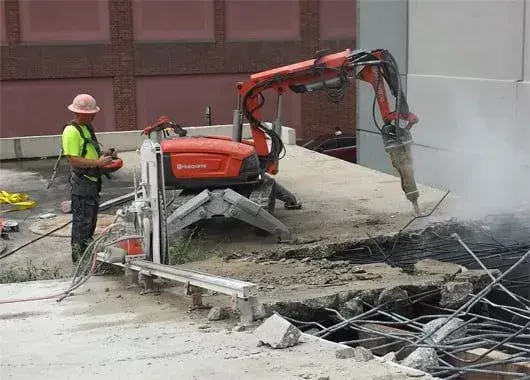
High-output breaking class
Configuration B
Production where access is limited.
A stable remotely operated platform for heavier breaking, crushing and progressive slab removal under a project-specific structural sequence.
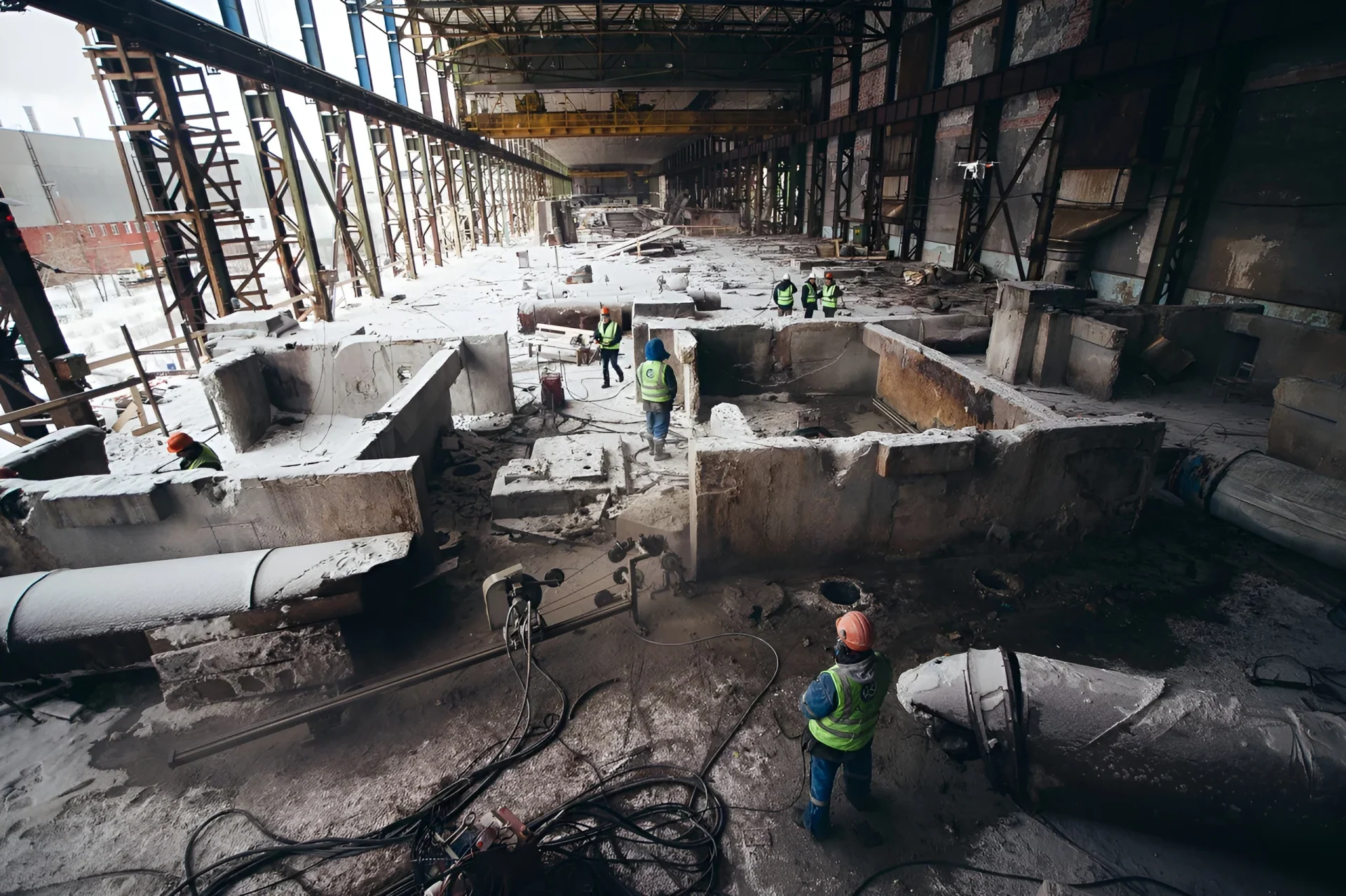
Fleet photography from Arasar’s established robotic-demolition media library. Exact carrier and attachment configuration is confirmed per project.
Attachment ecosystem
The machine changes with the task.
The carrier is only the beginning. Interchangeable hydraulic tools allow the same platform to break, crush, sort and clear through a coordinated sequence.
01
Hydraulic breaker
High-energy breaking for reinforced concrete, refractory material and localised structural removal.
02
Concrete crusher
Controlled crushing where lower noise and vibration are important to the retained environment.
03
Sorting grapple
Handling, separating and loading debris while keeping the workface organised.
04
Bucket & specialist tools
Excavation, material movement and project-specific tooling selected around the actual constraint.
Designed around the constraintAccess · load · risk · sequence
Where robotics earns its place
Complex environments become workable.
Robots are not selected because they look advanced. They are selected when remote operation, compact access and controlled hydraulic force solve a real site constraint.
01Active commercial refurbishments02Confined industrial spaces03Selective wall and slab removal04Plant rooms and basements05Refractory and furnace structures06High-risk or unstable work zones
Robotic demolition workflow
The robot enters only after the method is ready.
Every deployment connects machine selection to structural review, access, temporary controls, operator positioning and progressive material removal.
01
Access and loading
Verify the travel route, openings, floor capacity, working radius, power and debris path before the machine enters the work zone.
02
Method and attachment
Match the tool, machine class and temporary controls to the material, retained structure and required production rate.
03
Remote execution
Operate through the engineered sequence with exclusion zones, dust controls, supervision and continuous communication.
04
Progressive clearance
Remove broken material in controlled stages so access, visibility and structural loading remain within the planned limits.
Remote does not mean risk-free
Technology creates distance. The method creates safety.
Robotic operation can move the operator away from the immediate breaking zone, but it still requires competent supervision, verified exclusion areas, controlled movement, emergency procedures and a structure-specific sequence.
Final capacity, access and attachment choices are always confirmed after a project-specific review.
01Where are demolition robots most useful in Dubai?+
They are especially valuable in confined, operational or structurally sensitive environments where conventional excavators cannot access the workface and direct manual breaking would create unnecessary exposure.
02Can a demolition robot work on an upper floor?+
Potentially, but never by assumption. The access route, slab capacity, point loads, working position and debris load must be reviewed before the platform is selected or mobilised.
03Which attachments can be used?+
Common attachments include hydraulic breakers, concrete crushers, grapples and buckets. The final attachment and carrier configuration is selected around the actual material and removal sequence.
04Does remote operation remove every safety risk?+
No. It reduces direct exposure at the workface, but competent operators, exclusion zones, structural planning, supervision, dust control and emergency procedures remain essential.
05Are the exact new robot models already published?+
The fleet expansion is being introduced as a capability update. Final machine class, attachment and technical configuration are confirmed in the project proposal so the selected system matches the site rather than a generic specification.














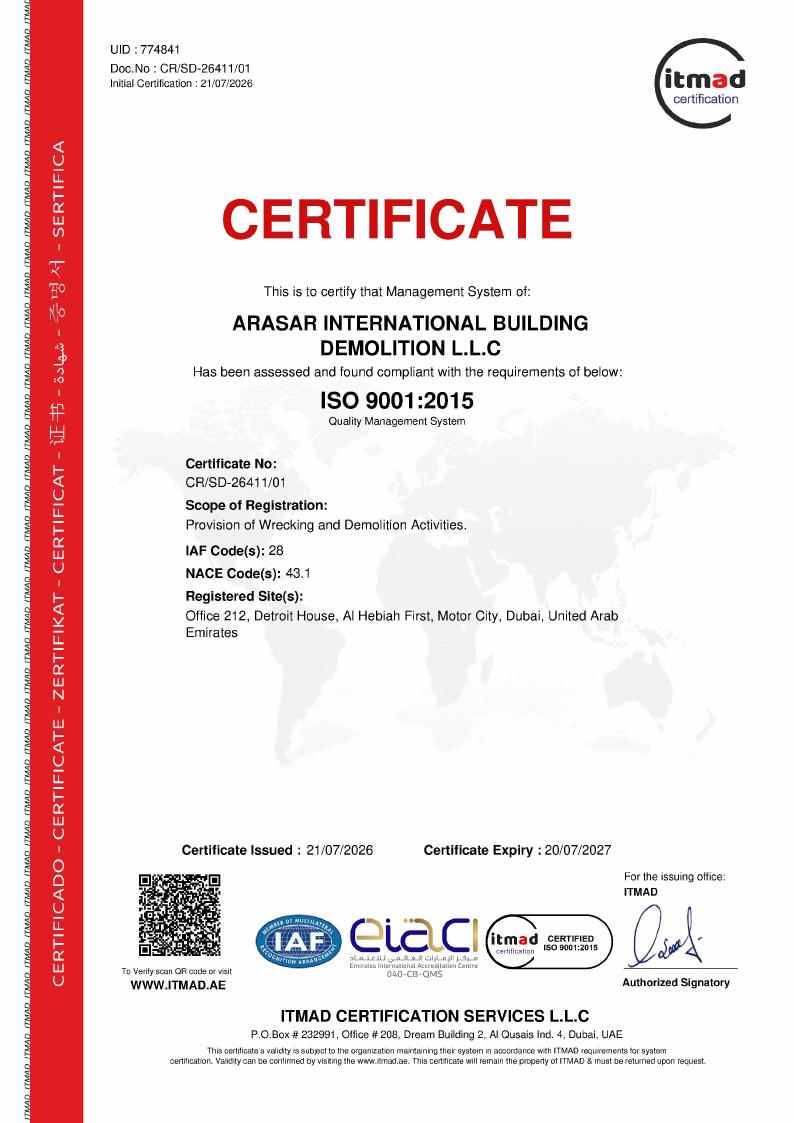 Full certificate