
















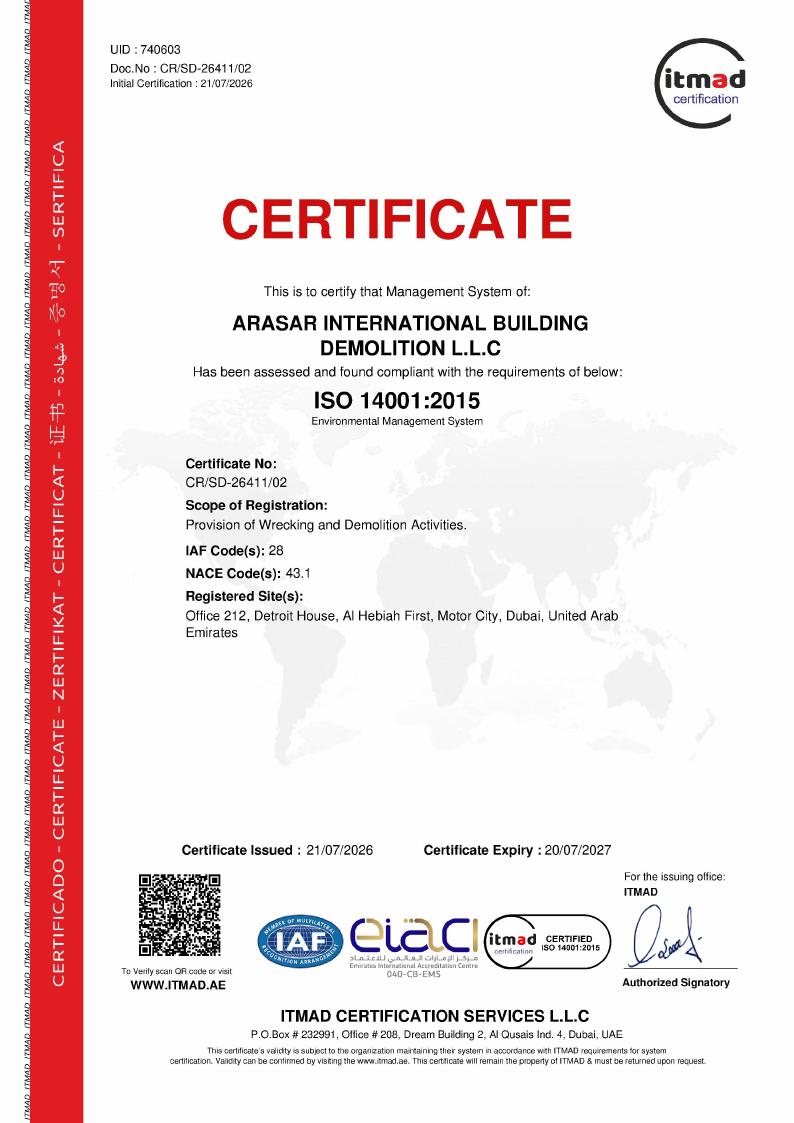

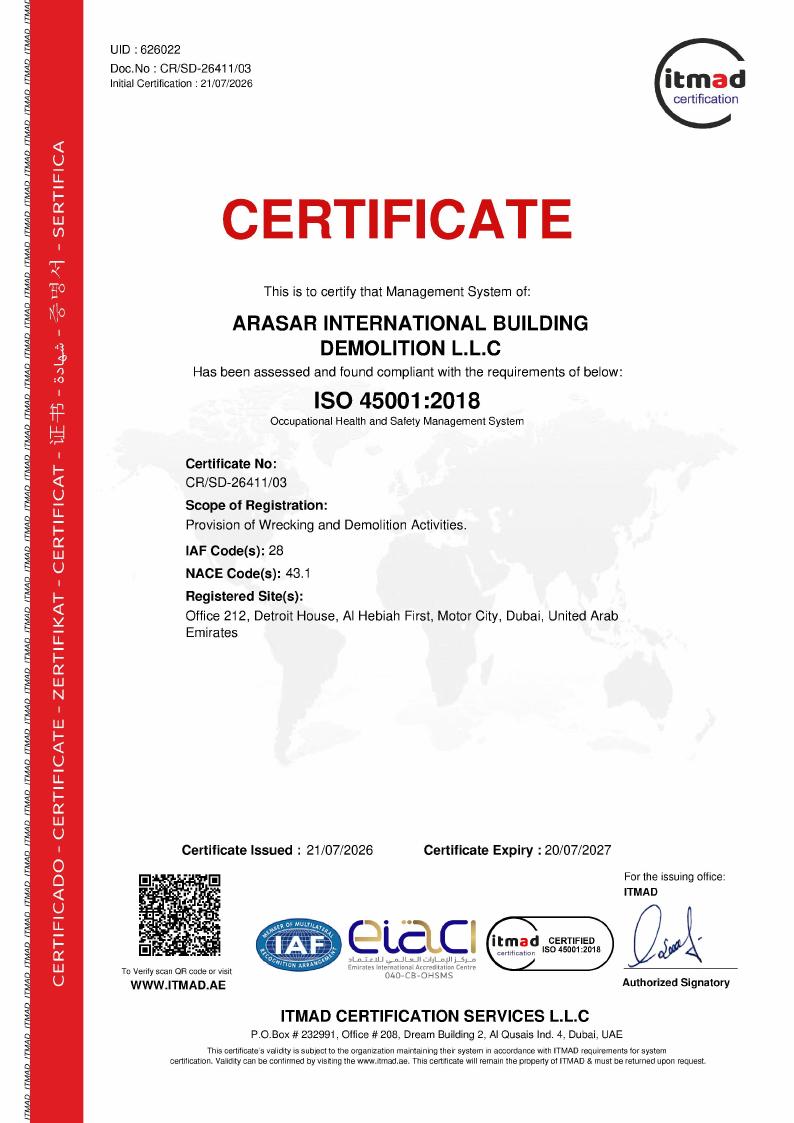


Need an execution contractor?
Demolition services in Dubai and across the UAE.
This article explains the planning question. For scope review, method selection and a site-specific technical proposal, continue to Arasar's primary service page.
Verify the structure, services and permit route
The project team should establish ownership and scope boundaries, available drawings, structural form, condition, alterations, hazardous-material information and the status of utilities. Site findings must be reconciled with the information used for the demolition design.
Permit requirements depend on the relevant UAE authority and project location. For example, Dubai Development Authority lists a site plan, utility NOCs for mechanical demolition, hoarding layout, method statement, project-specific HSE and emergency plan, risk assessments and an impact study for neighbouring buildings among its demolition-permit documents. The current authority checklist should be confirmed for every project.
- Structural survey and verified demolition boundary
- Utility identification, isolation and required NOCs
- Neighbouring-building and public-interface review
- Project-specific method, risk and emergency documents
Demolish in a sequence that preserves stability
The demolition design should explain the direction of work, temporary support, plant positions, release sizes and the condition required before each stage advances. A top-down approach is common for buildings, but the safe sequence must follow the actual load paths, access and retained interfaces.
Where an adjacent or retained structure could be affected, the responsible engineer should define support and inspection requirements. Cutting, lifting, robotic breaking and mechanical demolition may be combined to keep released sections and changing loads within the planned limits.
- Defined stability and temporary-works hold points
- Verified plant reach, operating surface and attachment
- Controlled section weights, lifting and drop zones
- Stop-and-review criteria for unexpected conditions
Separate people, plant and falling material
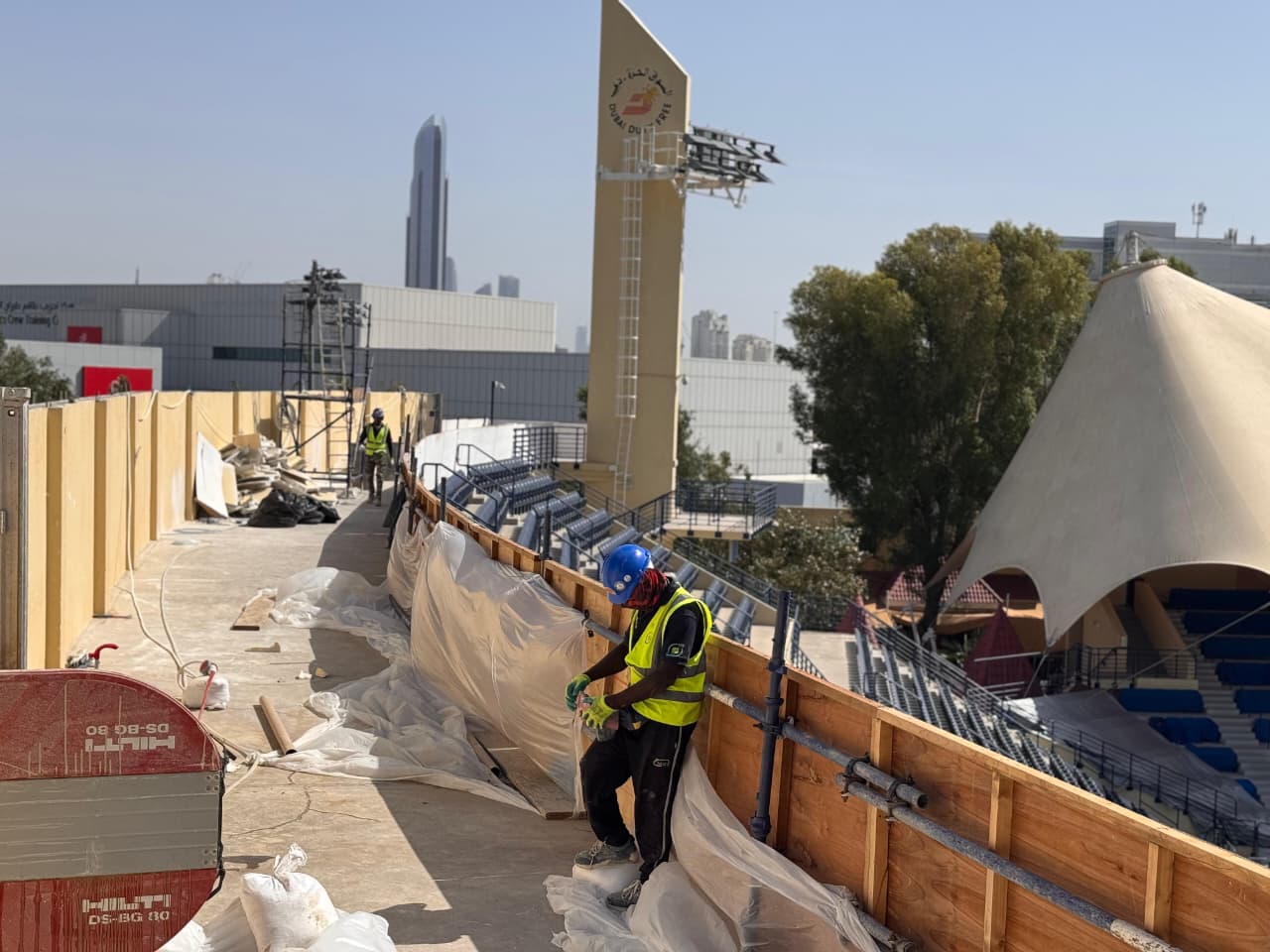
Exclusion zones must reflect the selected method, equipment movement, possible falling or ejected material and the vulnerability of nearby roads, properties and live operations. Hoarding, screens, access control, supervision and communication should work as one site arrangement.
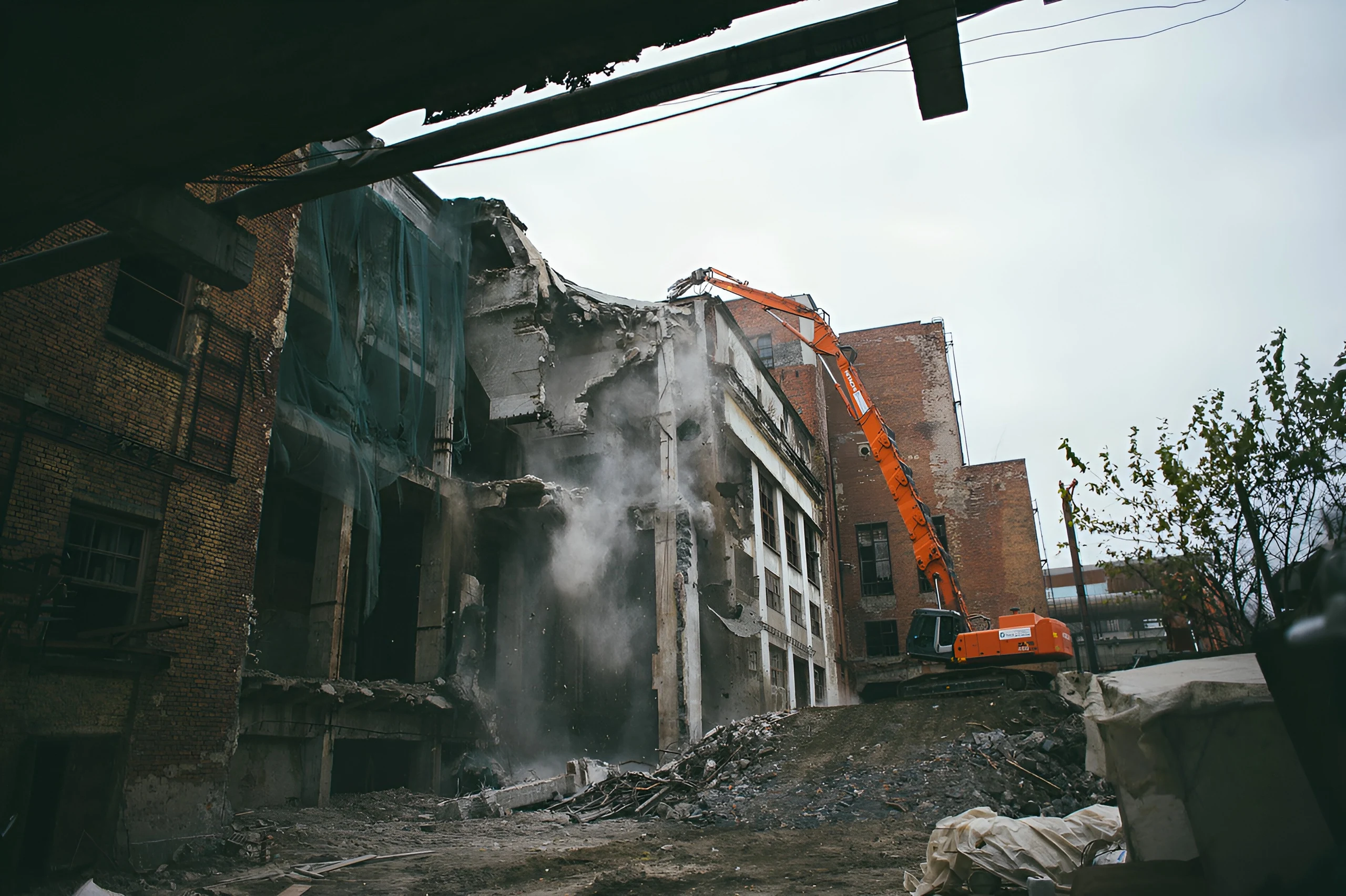
Rubble should follow a controlled route rather than being thrown from height. The handling method, collection zone, floor or ground capacity, secondary processing and truck movements must be planned before production begins so debris does not compress safe working space.
- Physical separation and authorised access
- Protected rubble chutes, lifting or machine-handling routes
- Dust, noise and vibration controls matched to the method
- Emergency access kept clear throughout the sequence
Track demolition safety KPIs that release the next stage
Useful demolition safety KPIs show whether the next structural stage is ready to proceed. They should connect the approved method to observable site conditions instead of relying only on injury totals after an event has already occurred.
The project team can agree a concise dashboard around permit and utility readiness, method-statement hold points, plant inspections, exclusion-zone observations, dust, noise or vibration actions, near misses, complaints, unplanned stoppages and corrective-action closure. Targets and action levels remain project-specific and should be assigned to named responsibilities.
- Percentage of scheduled hold points released with complete evidence
- Utility isolations, NOCs and work-zone permits verified before exposure
- Plant, attachment and operating-surface checks completed before each shift or stage
- Dust, noise and vibration readings or observations closed within agreed action levels
- Near misses, public or neighbour complaints and unplanned method changes reviewed
- Corrective actions closed before the affected demolition activity restarts
Control waste streams and close each stage
Dubai Municipality instructs construction and demolition contractors to separate waste at site before transport, including concrete, reinforcement and other recoverable materials. Work zones and containers therefore need to be included in the logistics plan rather than added after debris accumulates.
A useful close-out record confirms completed zones, remaining hazards, inspections, material movements and the agreed handover condition. For a demolition proposal, provide Arasar with drawings, surveys, site photographs, utility status, retained interfaces, access limits, working hours and the required completion level.
Frequently asked questions
01What are the main safe demolition procedures in the UAE?
The core sequence is to verify the structure and services, confirm the applicable permit route, engineer stability and temporary works, establish exclusion and environmental controls, demolish in defined stages, control rubble and waste routes, and inspect each stage before release.
02Can demolition start before utilities are isolated?
Affected utilities must be identified and made safe in accordance with the project and relevant authority requirements before demolition exposes workers, plant or the public to them. Required NOCs and isolation evidence should be confirmed for the specific site.
03Why are demolition hold points important?
Hold points allow the team to verify stability, temporary support, work-zone condition, plant position and debris clearance before the next structural element or zone is released.
04How should demolition waste be managed in Dubai?
The project should provide controlled collection and transport routes and separate recoverable construction and demolition materials at site in line with current Dubai Municipality requirements and the approved waste plan.
Technical and regulatory references
Requirements remain project- and authority-specific. These public sources support the technical or regulatory points used in this guide.
Project note
Guidance is the starting point. The site determines the method.
Every structure, access route and operating environment is different. Final engineering, approvals and controls should be based on verified project information and a site-specific assessment.