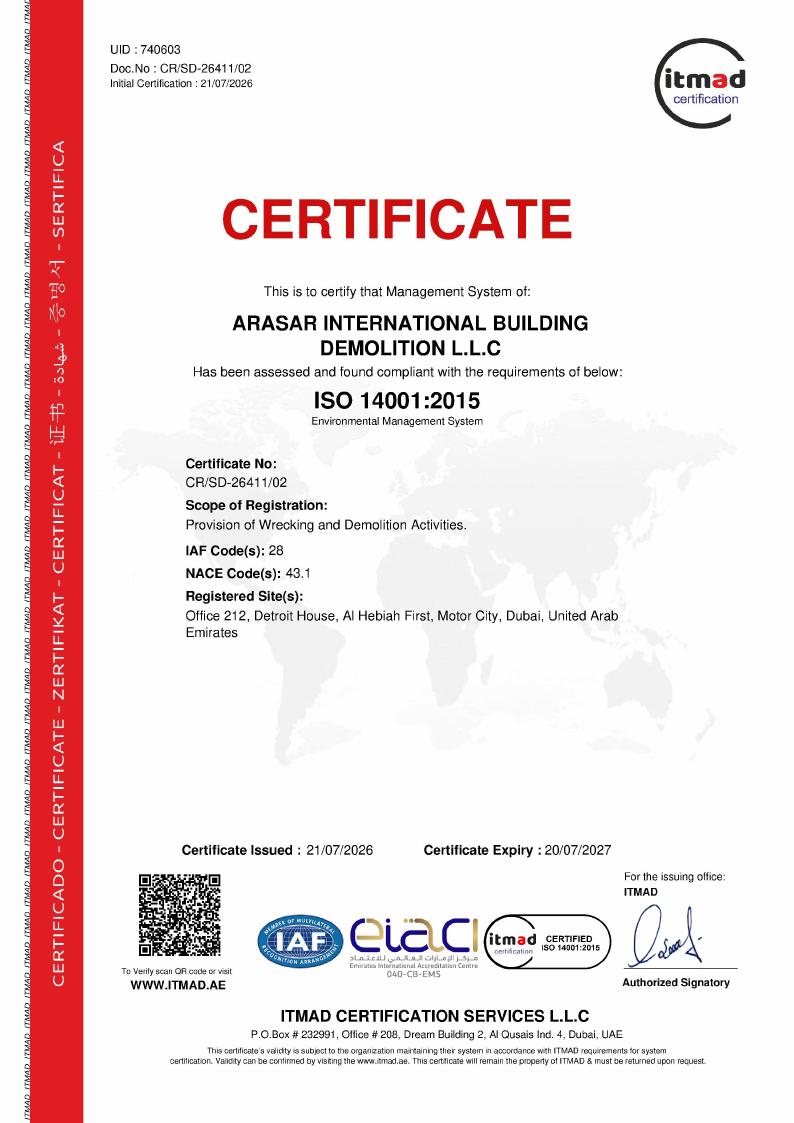
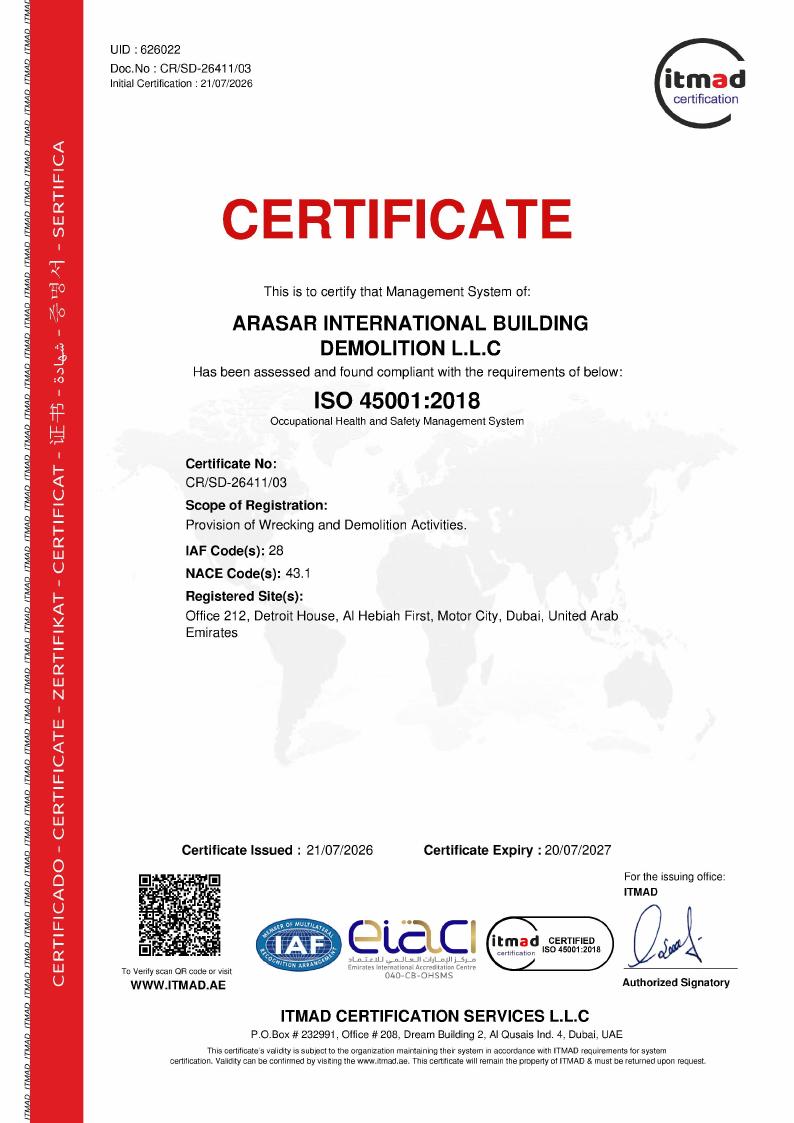
ITMAD and EIAC marks are displayed together, at equal visual weight and without altered proportions, in accordance with the issuer's rules for web use.
Selective demolition · Dubai & UAE
Selective demolition in Dubai and across the UAE.
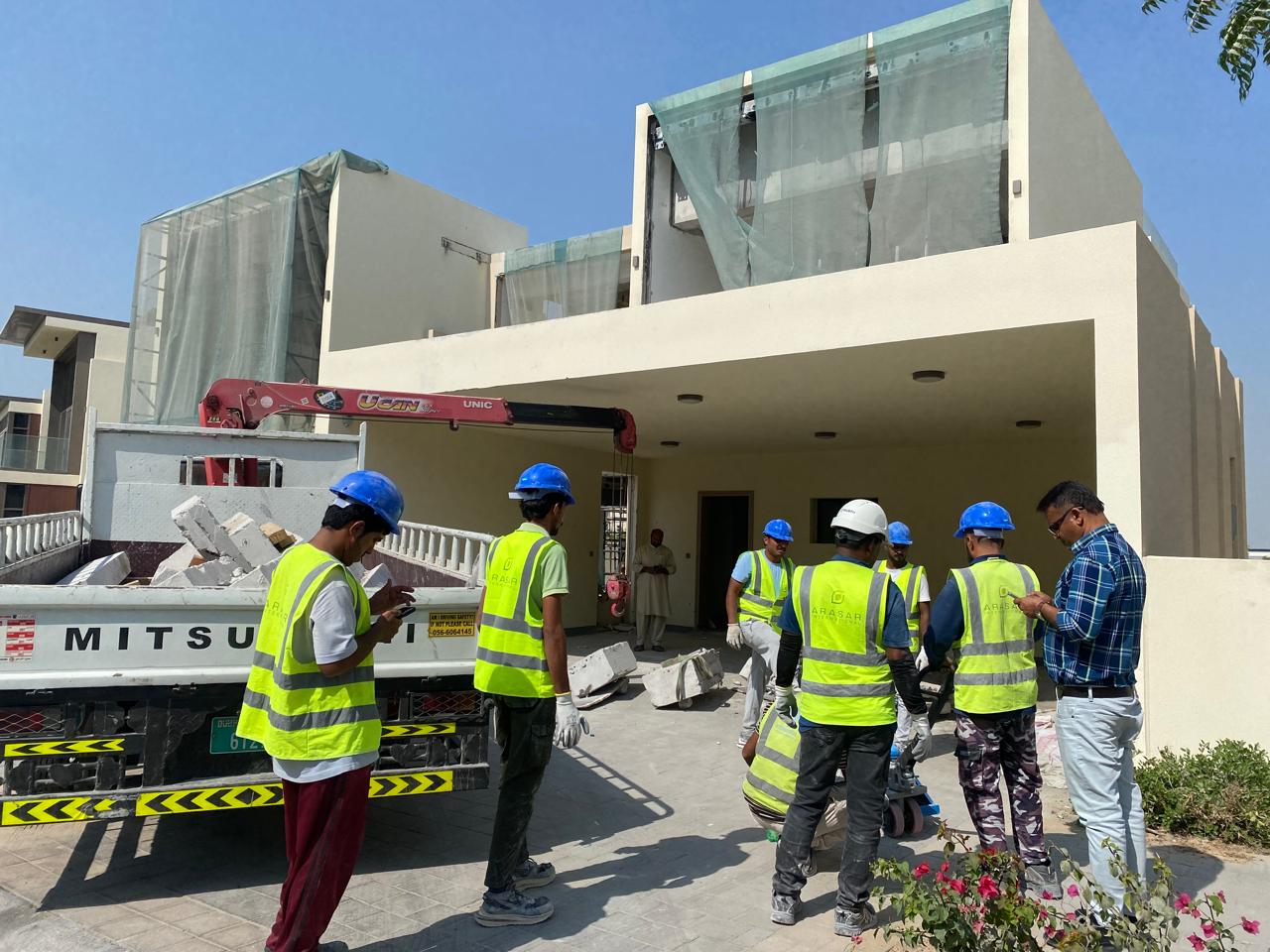
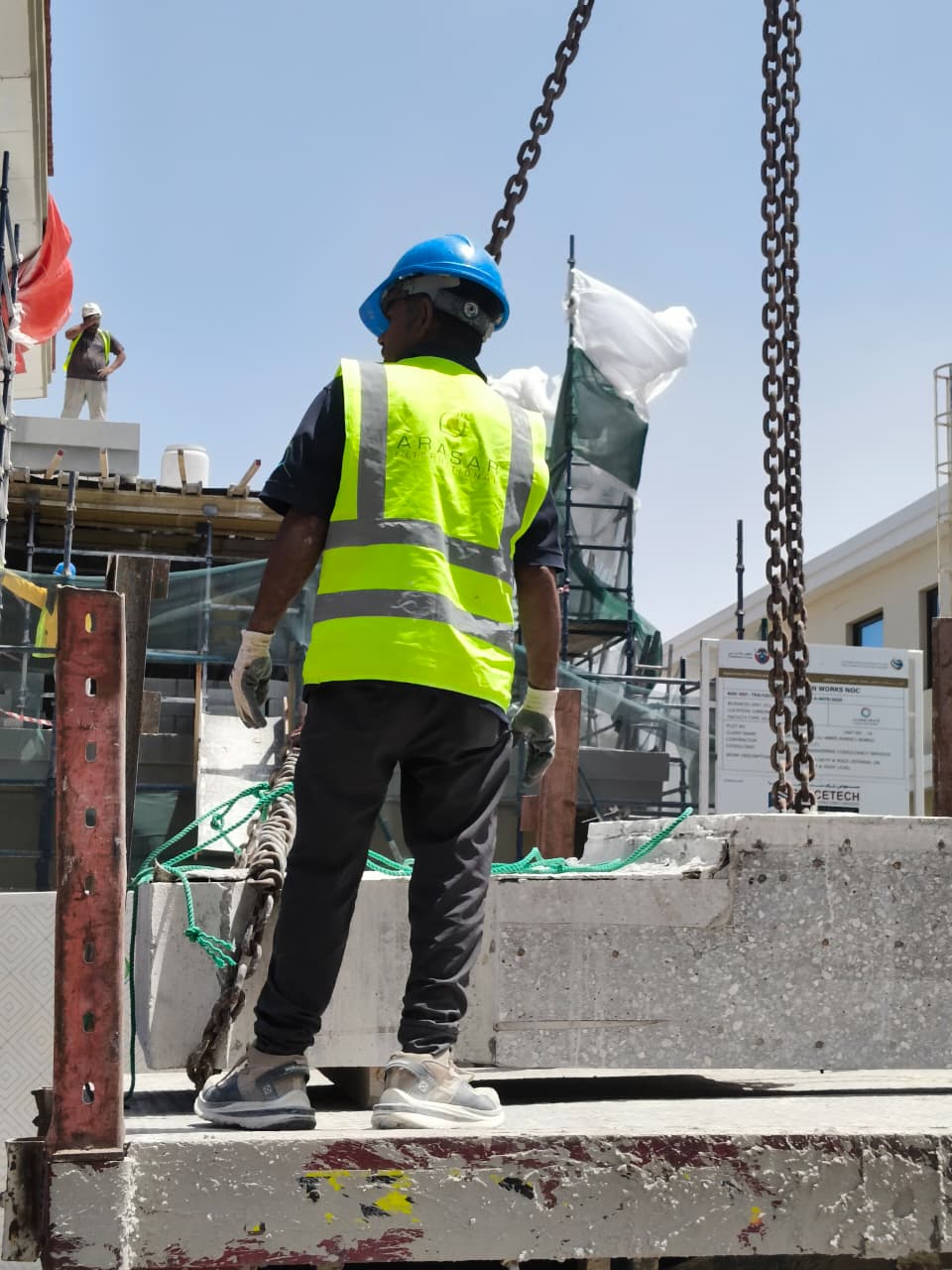
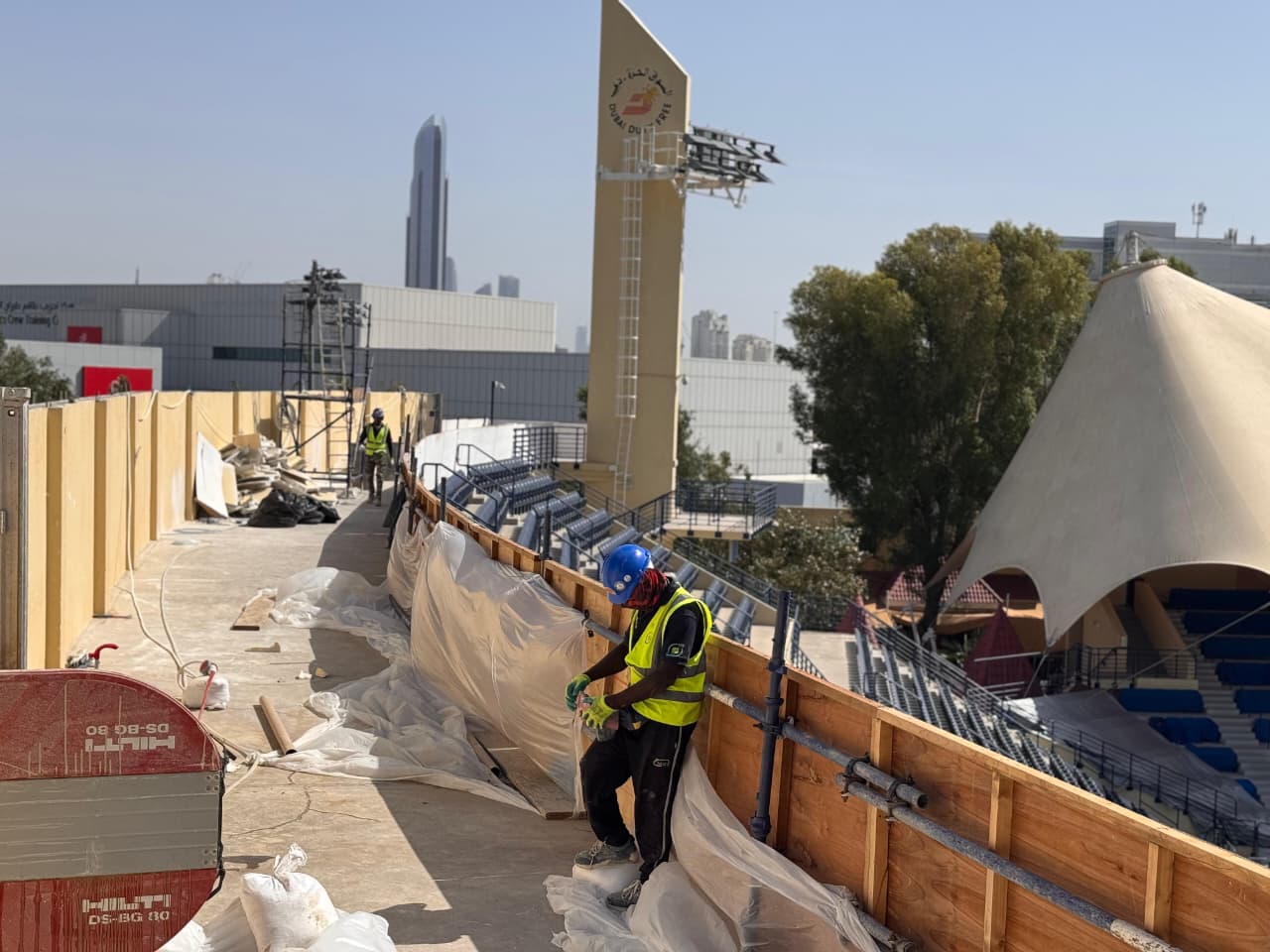
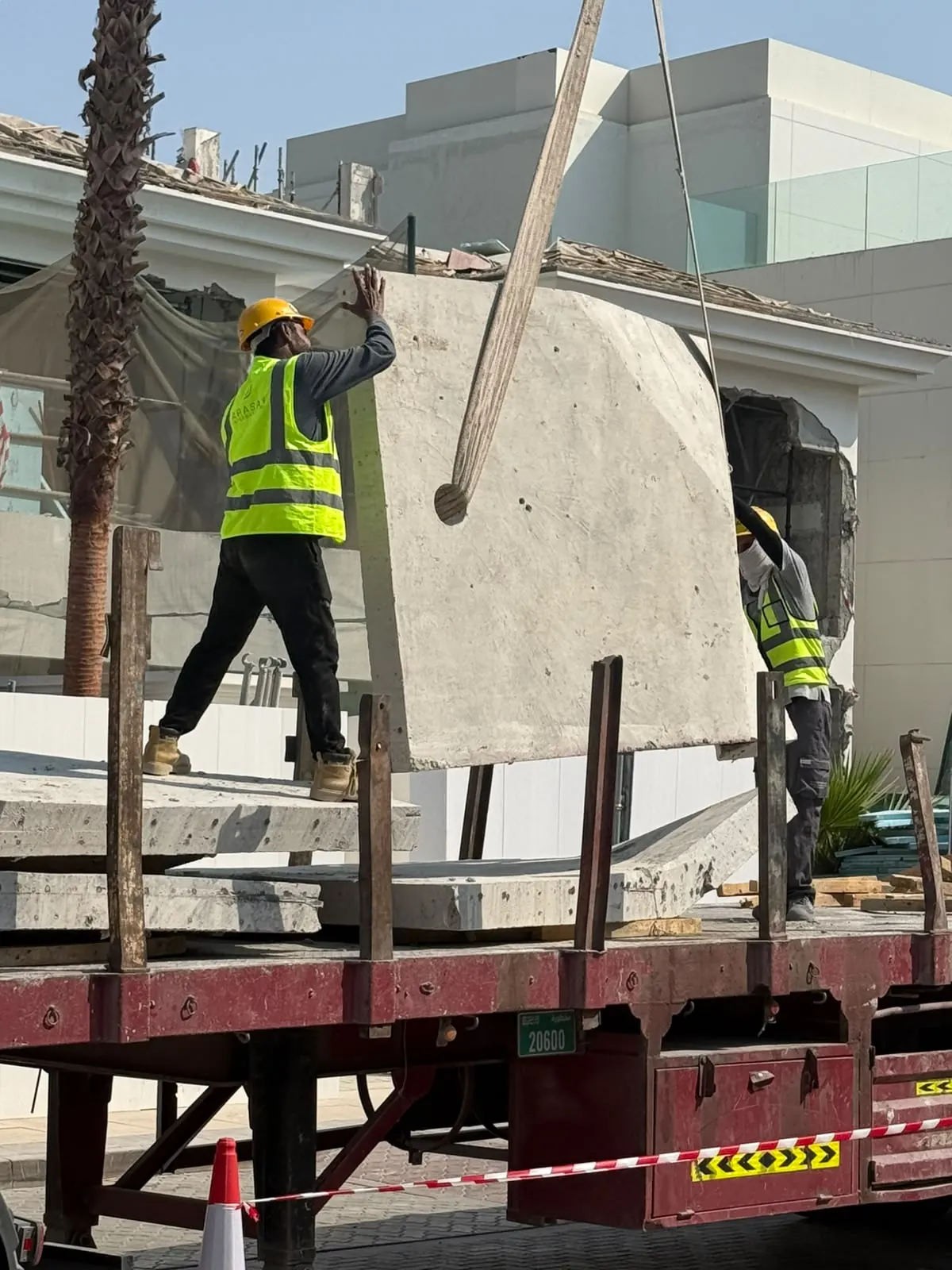
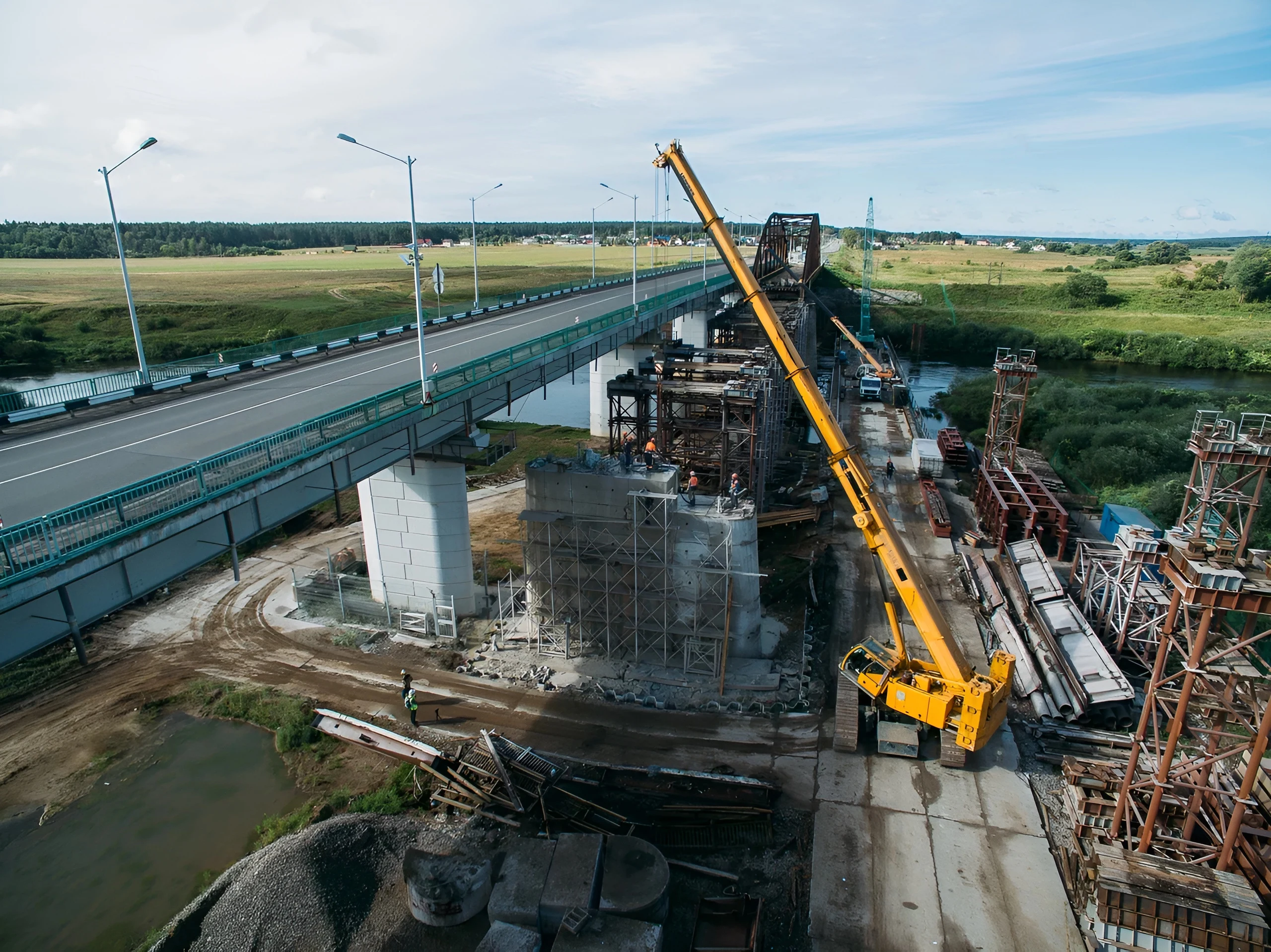
Arasar provides selective demolition for renovation, refurbishment and structural alteration in Dubai and across the UAE. The removal boundary is coordinated with the retained structure, finishes, services, occupants and the information required by the next trade.
Selective demolition is not small-scale conventional demolition. It requires more investigation because retained elements may depend on the same walls, slabs, reinforcement or services as the material being removed.
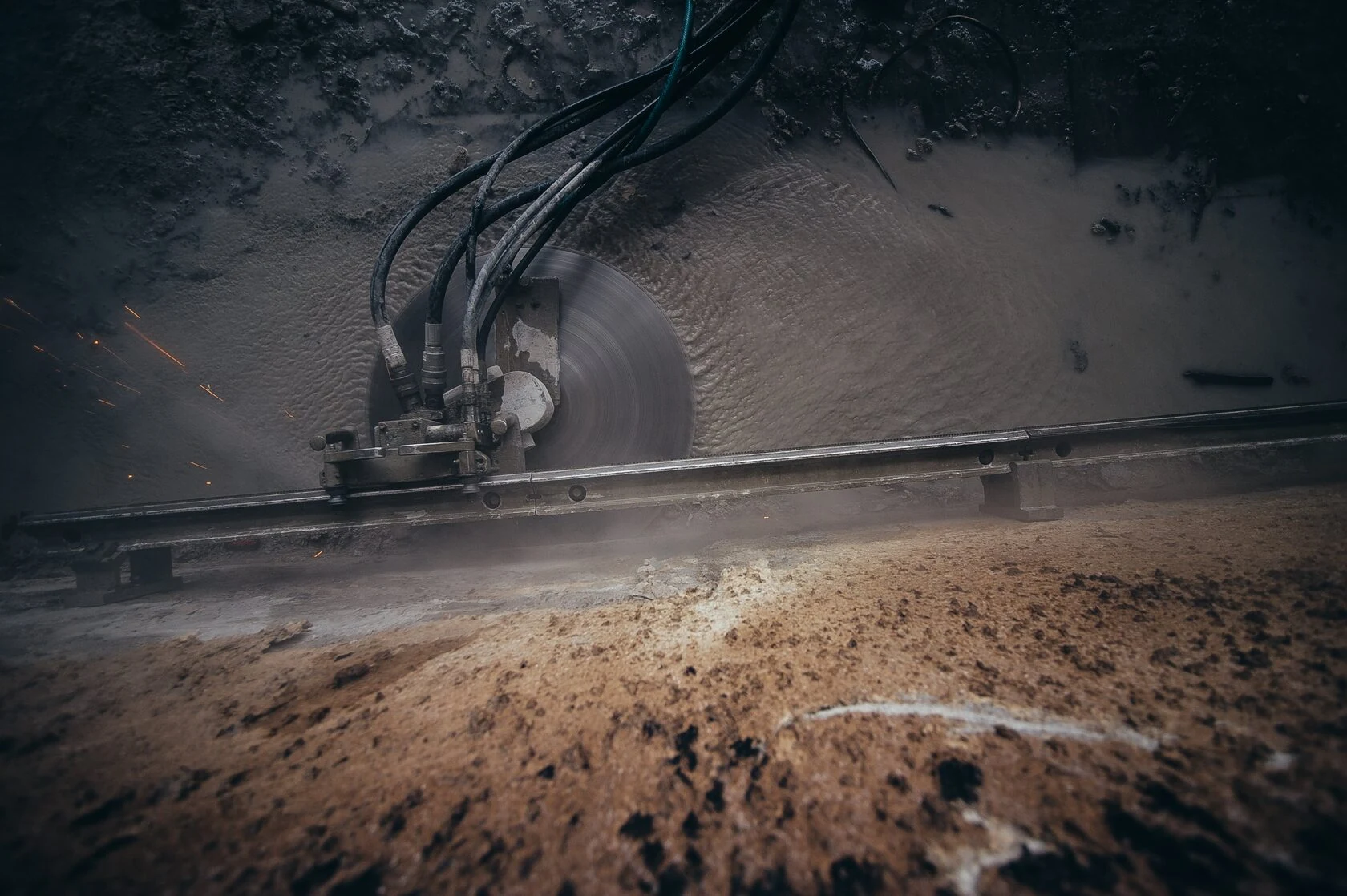
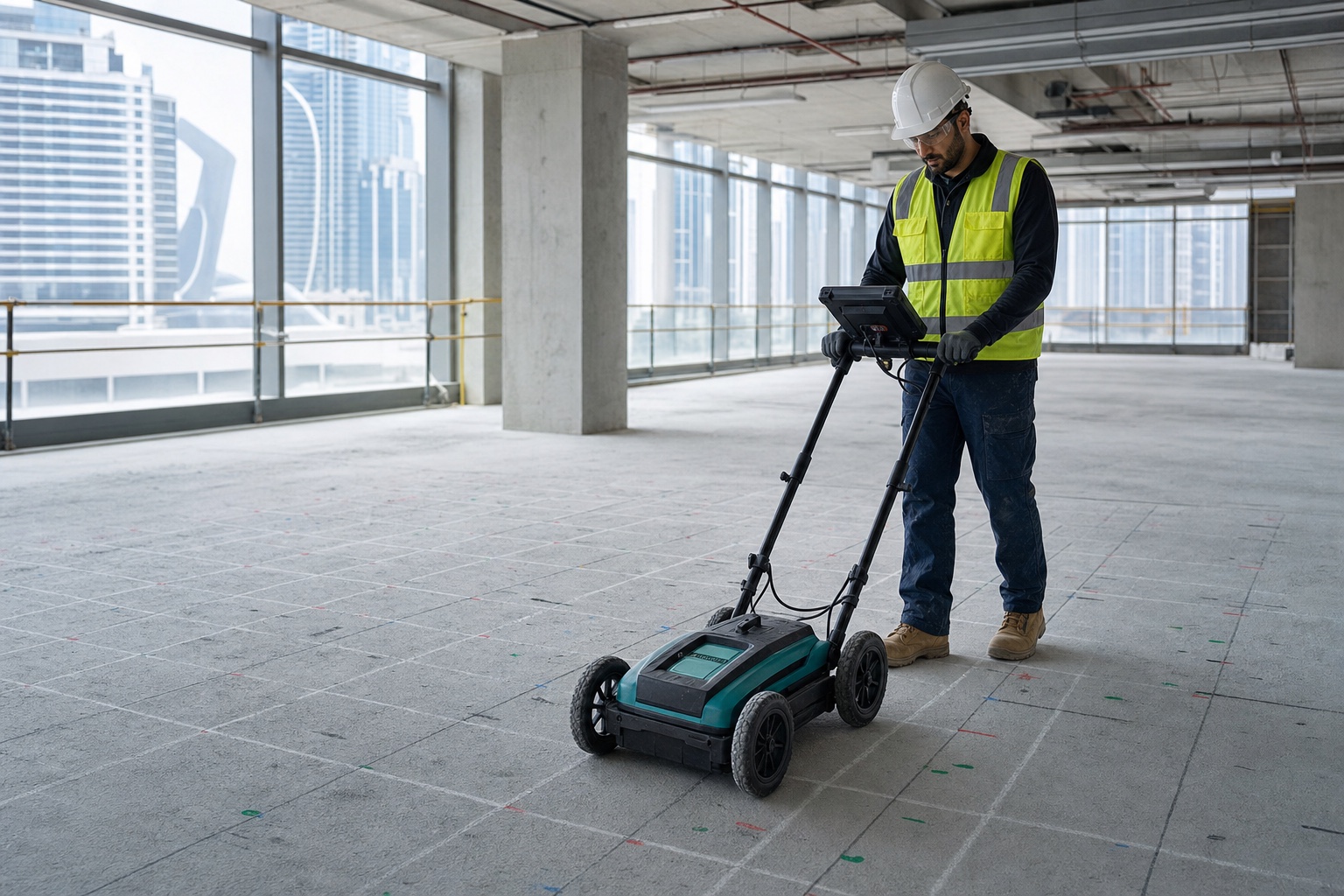
Scanning, saw cutting, robotic breaking, temporary support and compact handling equipment help define and remove the scope with less overbreak. Work can be divided into phases around operational buildings and sensitive finishes where the project conditions allow.
Precision is measured by the condition of what remains and the quality of the interface handed to the next trade.
01
Retained-first planning
The method begins with the structure, finishes and services that must remain rather than with the material being removed.
02
Low-impact tools
Scanning, diamond cutting and compact robotic equipment can define boundaries and reduce unnecessary vibration or overbreak.
03
Trade-ready handover
Edges, openings and cleared zones are documented around the geometry and condition required by the following construction stage.
Alteration workflow
Investigate, separate, remove, inspect.
Each stage narrows uncertainty around concealed features and the final retained edge.
01
Map retained assets
Confirm structure, finishes, services, occupants, access and the exact renovation interface.
02
Scan and support
Investigate concealed features and establish temporary support or load-transfer requirements.
03
Define the boundary
Saw cut, drill or carefully break along the agreed retained and removed interface.
04
Remove and inspect
Process isolated material, review retained edges and hand over the completed alteration zone.
Typical deliverables
A clean interface for the next trade.
Selective-demolition layout
Scan and support coordination
Phased removal sequence
Retained-interface inspection record
Technical questions
Before mobilisation.
Final methods and capacities are confirmed after a project-specific site assessment.
01What is selective demolition?+
Selective demolition removes defined building elements while retaining and protecting the surrounding structure, finishes or operations. It is commonly used for renovation and structural alteration.
02Can selective demolition happen in an occupied building?+
Potentially, through phased zones, access controls, low-impact methods, dust and water management and agreed working periods. Suitability depends on the building and operations.
03Is scanning always required?+
Scanning is recommended wherever concealed reinforcement, post-tension cables or services could affect the proposed removal. Drawings, structural requirements and scan findings should be reviewed together.
04How is damage to retained work reduced?+
The removal boundary is defined through investigation, set-out, cutting or controlled breaking, temporary support and a sequence that limits uncontrolled force outside the work zone.














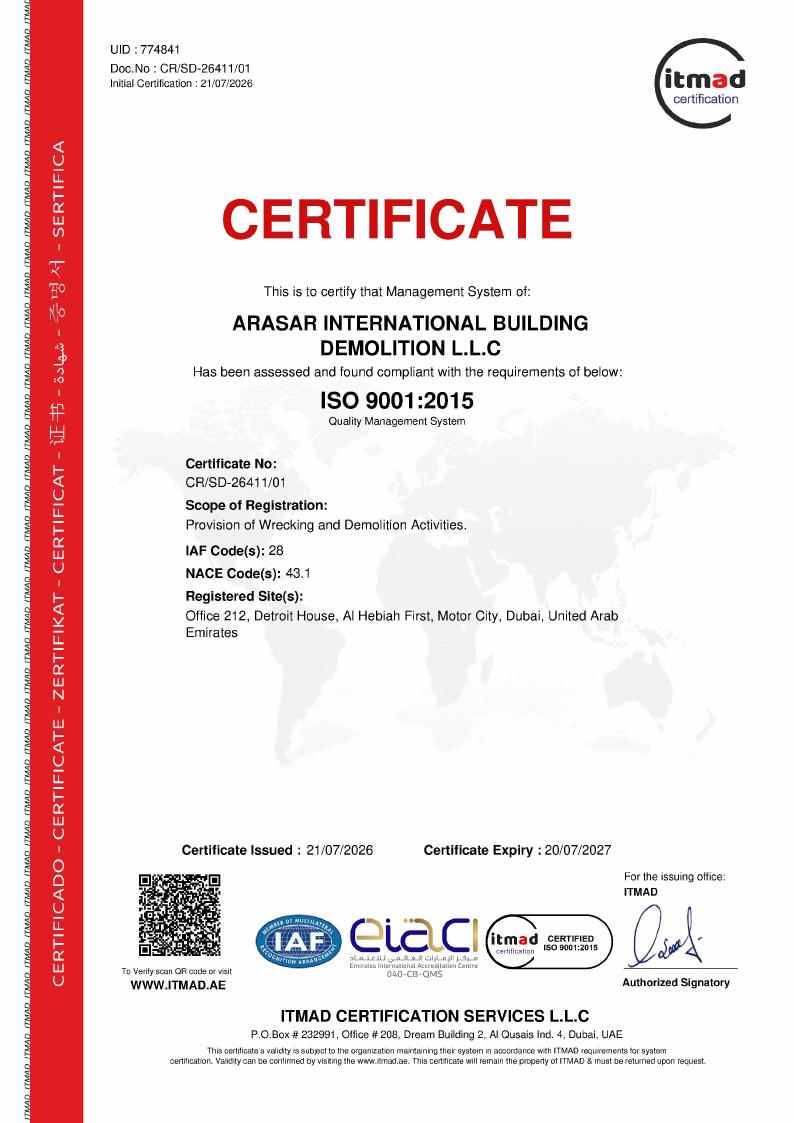 Full certificate