


















Need an execution contractor?
Selective demolition in Dubai and across the UAE.
This article explains the planning question. For scope review, method selection and a site-specific technical proposal, continue to Arasar's primary service page.
What selective demolition involves
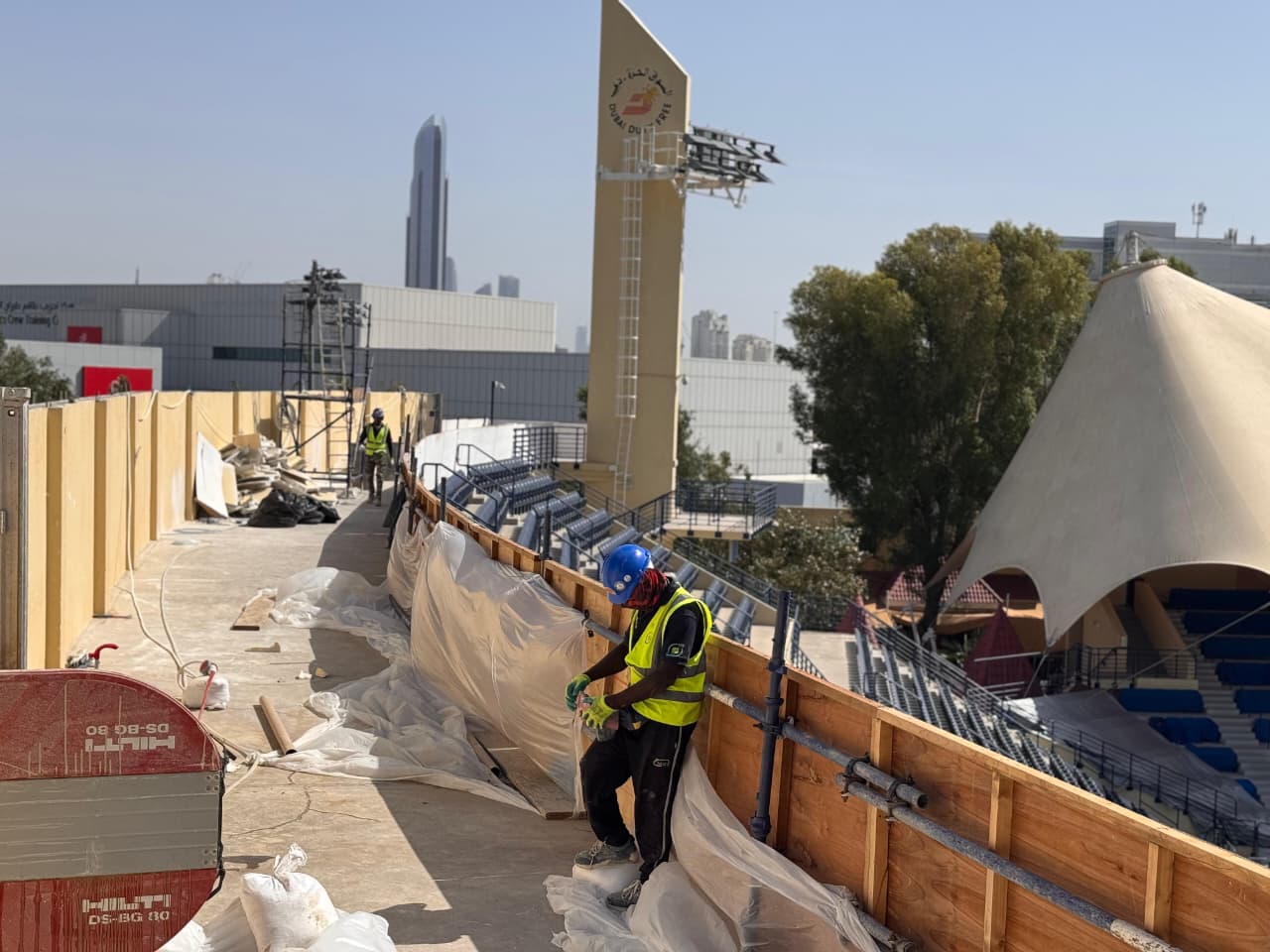
Selective demolition is used for renovation, extension and structural alteration where walls, slabs, beams, columns, finishes or building-services zones must be removed without losing the whole asset. The method begins by defining the retention line: what stays, what goes and what must remain operational during the work.
Diamond cutting, core drilling, compact plant, hydraulic tools and remote-controlled demolition robots may be combined around the sensitivity, thickness and access of the structure. Temporary support and clean handover interfaces are part of the demolition scope, not afterthoughts.
- Interior walls, floors, ceilings and partitions
- Defined slab, beam or column sections
- Damaged extensions or isolated building zones
- Openings around new structural or MEP work
When full demolition is more appropriate
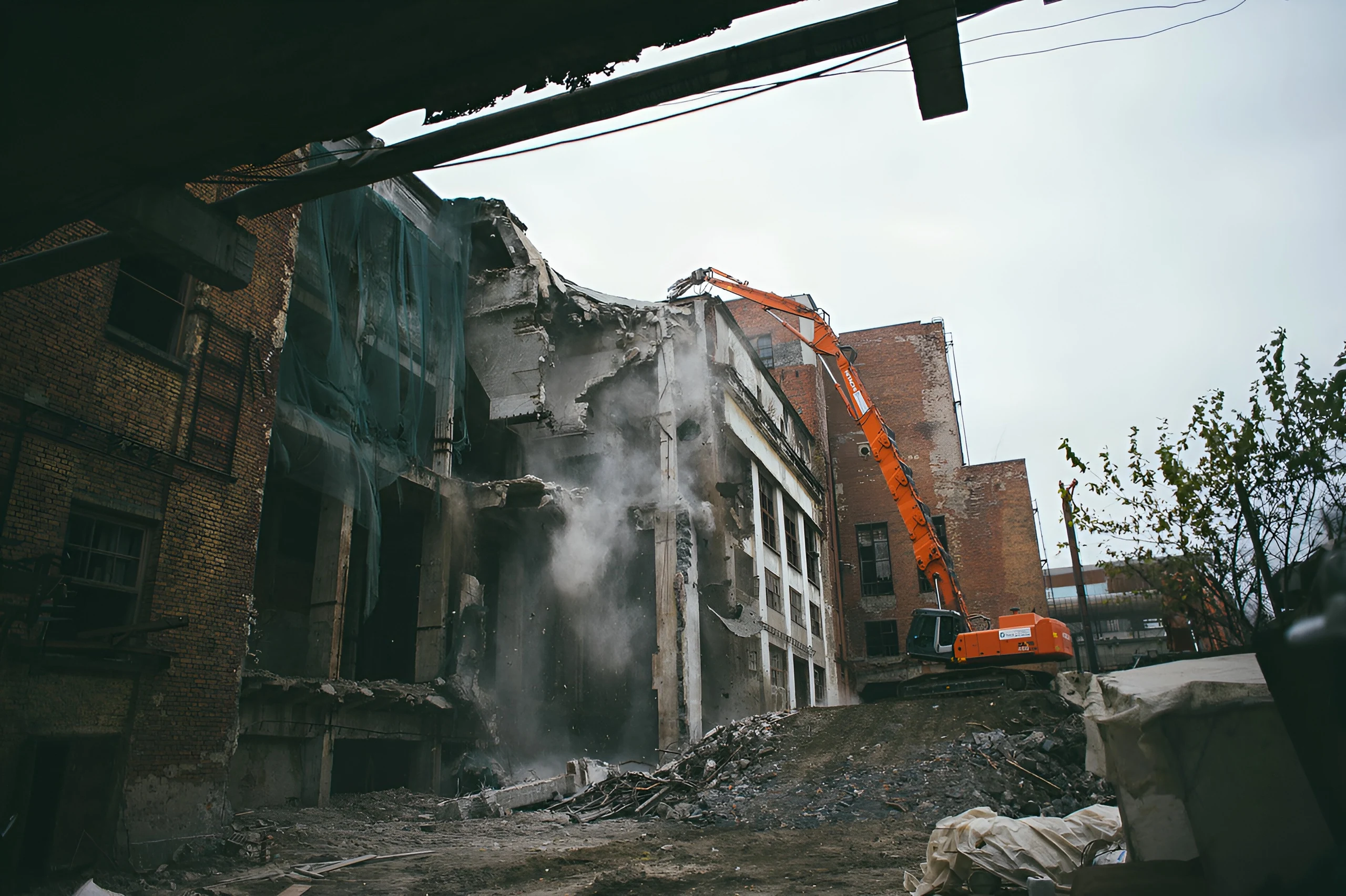
Full demolition may be the clearer route when the entire structure is being replaced, extensive deterioration makes retention impractical or the redevelopment requires a cleared plot. The agreed end state still needs definition: basements, foundations, slabs, utility interfaces and formation levels may not share the same removal boundary.
Complete demolition does not mean uncontrolled breaking. Structural sequence, plant positions, neighbouring assets, public interfaces, dust, noise, vibration, rubble routes and material recovery still have to be engineered around the building and its surroundings.
Selective vs full demolition: key differences
The decision should be based on the final project outcome rather than demolition volume alone. Selective work can involve more precise engineering and protection, while full demolition can involve larger plant, broader logistics and a different authority and waste route.
| Factor | Selective demolition | Full demolition |
|---|---|---|
| Scope | Defined elements or zones | Complete structure to an agreed level |
| Primary goal | Protect and reuse retained assets | Prepare for redevelopment or clearance |
| Typical use | Renovation and alteration | Replacement or major redevelopment |
| Main engineering focus | Retention line and temporary support | Overall stability and reduction sequence |
| Access and plant | Compact, precise or remote systems | Plant selected around height, reach and logistics |
| Cost driver | Complexity and protection | Structure, scale, access and material routes |
Five factors that determine the right approach
A professional review connects the demolition method to the next construction stage. Existing drawings are useful, but the decision should reflect the surveyed condition and the exact parts of the structure the new design intends to use.
- Future design: renovate, extend, modify or redevelop
- Structural condition, load paths and foundation interfaces
- Neighbours, occupied areas, roads and underground services
- Access for machines, lifting, debris and emergency routes
- Programme, waste obligations and required handover condition
How selective demolition is planned safely
The retained structure governs the sequence. The project team should define structural surveys, utility information, temporary support, exclusion zones, monitoring, dust and water controls, debris routes and hold points before removal begins. Low-impact cutting or robotic methods can reduce overbreak and direct worker exposure in suitable areas.
Selective demolition is not automatically cheaper or safer than full demolition. It becomes predictable when the removal boundary, engineering responsibility, protection measures and completion criteria are explicit. Arasar develops site-specific proposals from Dubai for suitable selective and full demolition projects across the UAE.
Frequently asked questions
01Is selective demolition cheaper than full demolition?
Not necessarily. Selective demolition can require detailed engineering, temporary support, protection and specialist equipment. Full demolition cost depends on structure, access, scale, plant, waste routes and the agreed end state.
02Can selective demolition protect neighbouring buildings?
The method can be designed to reduce effects on neighbours through structural assessment, controlled sequencing, cutting, protection and monitoring. The required controls depend on the actual building and surroundings.
03What equipment is used for selective demolition?
A project may use diamond saws, core-drilling rigs, compact mechanical plant, hydraulic tools and remote-controlled demolition robots. Equipment is selected around access, structure, exposure and the retained boundary.
04When is full demolition the better option?
Full demolition is generally more appropriate when the entire structure is being replaced, retention offers little practical value, extensive deterioration prevents useful reuse or redevelopment needs a cleared site.
Project note
Guidance is the starting point. The site determines the method.
Every structure, access route and operating environment is different. Final engineering, approvals and controls should be based on verified project information and a site-specific assessment.