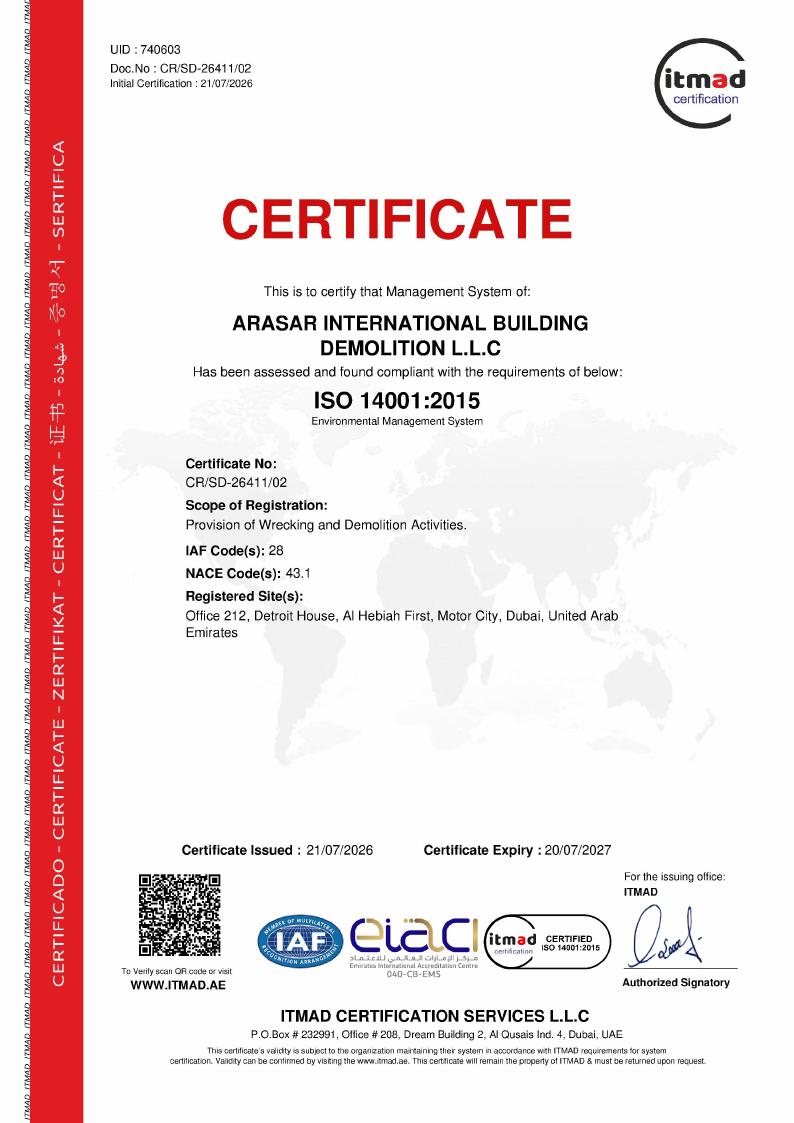
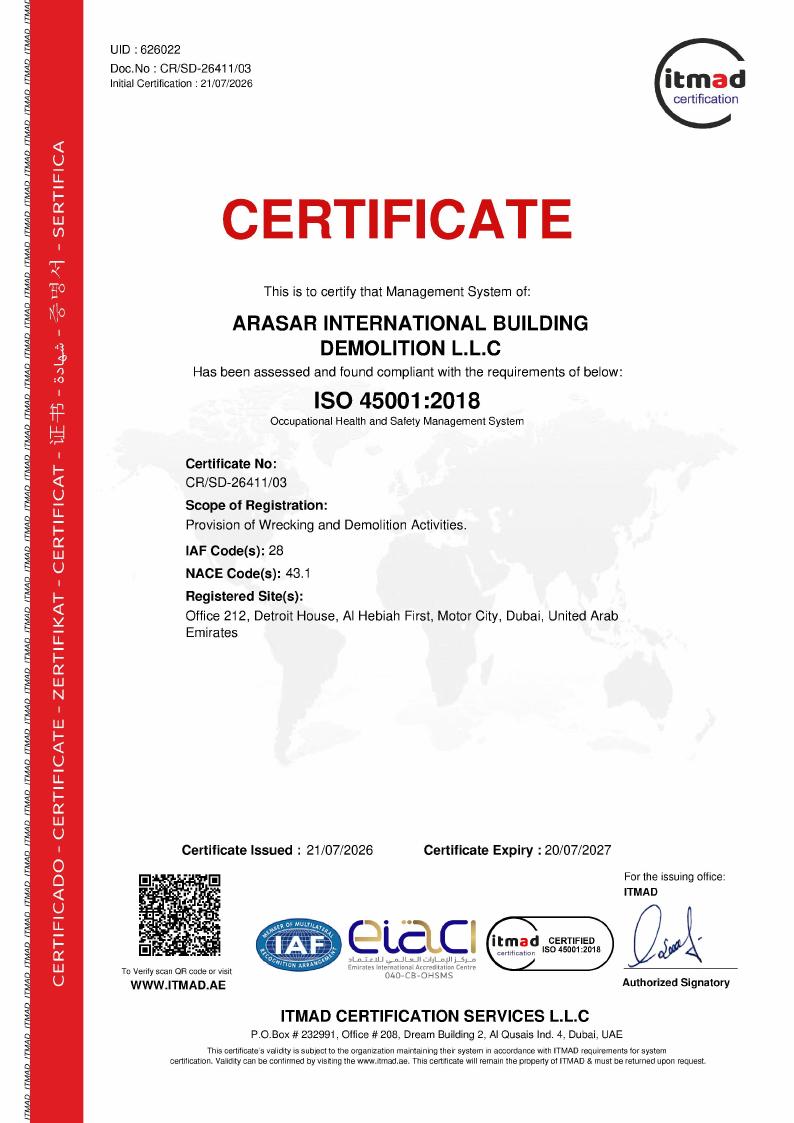
ITMAD and EIAC marks are displayed together, at equal visual weight and without altered proportions, in accordance with the issuer's rules for web use.
Concrete GPR scanning · Dubai & UAE
Concrete scanning and GPR services in Dubai and across the UAE.
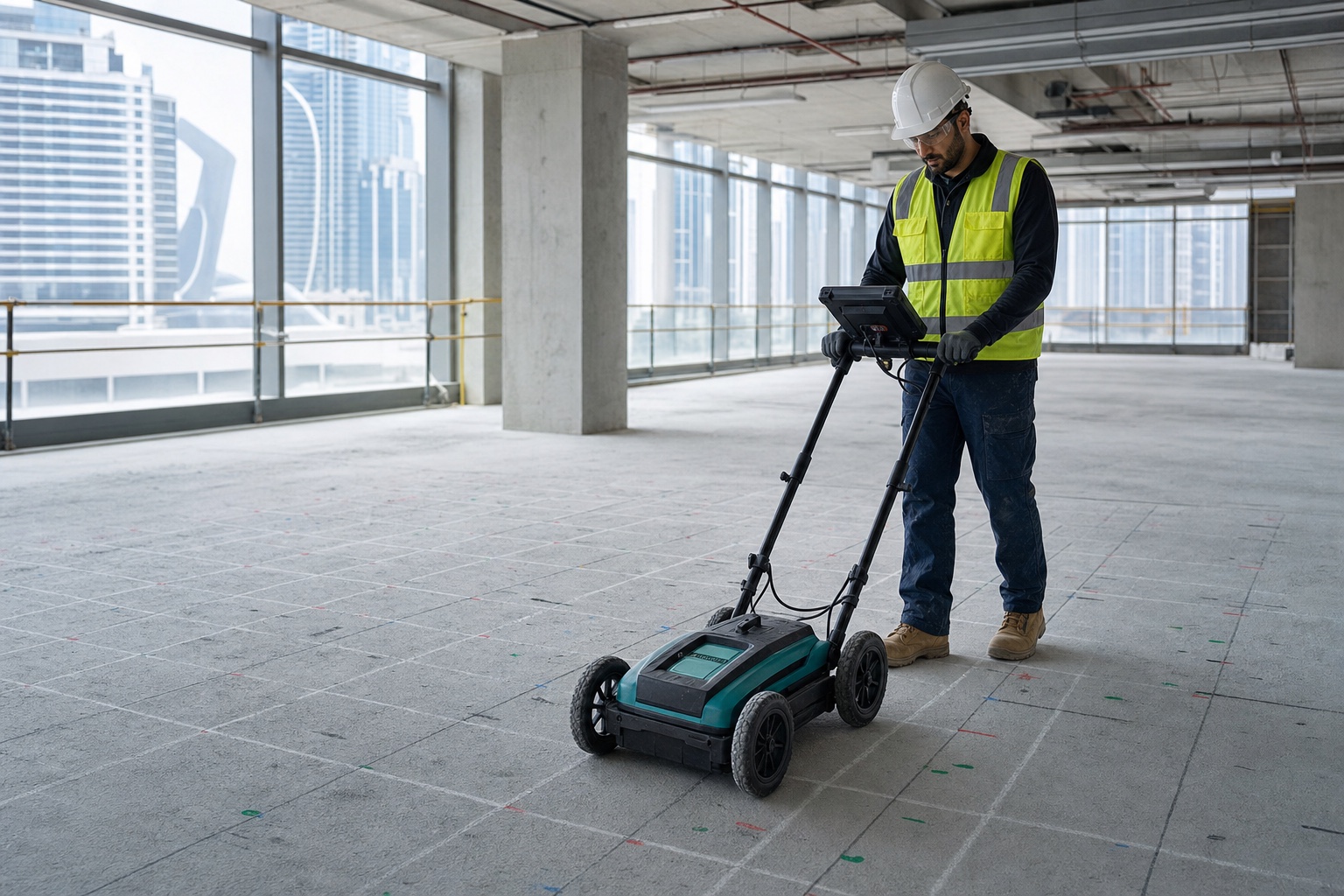
Arasar is a concrete scanning company in Dubai providing floor scanning, wall scanning and slab GPR surveys across the UAE. The investigation helps identify reinforcement, post-tension cables, conduits, voids, embedded services and concrete depth or thickness before drilling, cutting or structural alteration.
Floor, wall and slab GPR scanning before cutting or drilling.
Drawings do not always reflect the final as-built condition. Ground-penetrating radar and complementary non-destructive methods help teams understand what lies beneath the concrete surface without creating exploratory damage.
Scanning data is interpreted in the context of the proposed work. Findings are marked, recorded and discussed with the project team so cutting and drilling locations can be adjusted before mobilisation. Where conditions are complex, scan results should be coordinated with structural engineers and relevant utility information.
01Floor and slab scanning before cutting02Wall scanning before coring or openings03Concrete depth and thickness investigation04Rebar, post-tension and embedded-service location
Floor, wall and slab GPR scanning · Dubai & UAE
Concrete scanning tied to the exact floor, wall or slab intervention.
Arasar provides floor scanning, wall scanning, slab GPR surveys and concrete depth investigation from Dubai for suitable work across the UAE. The survey area, proposed intervention, expected depth, drawings and required site record are defined together so findings can guide cutting, drilling and controlled demolition.
Floor and slab scanning
GPR survey passes help project teams review reinforcement, post-tension risk and embedded services before floor coring, anchors, trenches or slab cutting.
Wall scanning before openings
Rebar patterns, conduits and other concealed features are investigated before wall sawing, core drilling or controlled structural openings.
Depth, thickness and marked findings
Suitable investigation can support concrete depth or thickness review, while marked and recorded findings are coordinated with drawings, structural requirements and the responsible project team.
Technology creates value only when it is integrated with the structure, the work environment and the required end state.
01
Risk reduction
Locating concealed hazards reduces the likelihood of utility strikes and structural damage.
02
Better set-out
Cutting and coring positions can be refined around the actual reinforcement and services.
03
Actionable records
Site markings and findings give engineers and contractors a common basis for decisions.
Project workflow
From uncertainty to a controlled sequence.
Each stage produces the information needed to release the next, keeping engineering and site execution aligned.
01
Define the objective
Confirm proposed works, scan area, required depth and known structural information.
02
Prepare the surface
Establish a reference grid and remove obstacles that would compromise data collection.
03
Scan and interpret
Collect passes in multiple directions and review anomalies against the project context.
04
Mark and report
Identify findings on site and issue the agreed record for coordination and approval.
Typical deliverables
Clear enough to build from.
Site markings and reference grid
Findings summary
Scan images where required
Recommendations for cutting or drilling
Your project enquiry
Define your concrete scanning requirement.
Tell us what you need to locate and what work is planned. This helps the team define the survey area and the records needed for the next decision.
What to send
Marked scan area and planned cutting or drilling positions
Structural drawings and known reinforcement or service information
Surface access, coverings and site photographs
Required on-site markings, report and programme
What affects the price
Area, accessibility, surface conditions and reporting requirements affect the scanning proposal. Detection capability and interpretation depend on the structure and survey conditions.
What to agree in the scope
Confirm the survey objective, limitations, markings and reporting deliverables. Scanning information supports the responsible engineer's review; it does not itself authorise a structural cut.
Final methods and capacities are confirmed after a project-specific site assessment.
01Can scanning identify every object inside concrete?+
No method provides absolute certainty in every condition. Detection depends on depth, spacing, moisture, material and access. Results should be interpreted alongside drawings, site knowledge and engineering judgement.
02Is scanning required before core drilling?+
It is strongly advisable wherever concealed utilities, reinforcement or post-tension systems may be present. Project specifications and local approval requirements may also require documented investigation.
03What information is needed before a scan?+
The proposed opening or drilling locations, available drawings, slab or wall thickness, access restrictions and the type of concealed feature of concern help define the correct survey scope.
04Does Arasar provide concrete scanning outside Dubai?+
Yes. Arasar mobilises for suitable concrete scanning and GPR assignments across the UAE. The scan area, access, expected depth, structure and required record are reviewed before mobilisation.
05What can GPR locate before concrete cutting?+
Depending on the structure and site conditions, GPR can help map reinforcement, post-tension cables, conduits, embedded services, slab features and potential voids. Findings must be interpreted with drawings and project information.
06Do you provide floor, wall and slab scanning services in Dubai?+
Yes. Arasar scopes GPR scanning for concrete floors, suspended slabs and walls before coring, saw cutting, anchors or structural alteration. The proposed intervention, access, expected depth and required site record are confirmed before mobilisation.
07Can concrete scanning confirm slab or wall depth?+
GPR and complementary investigation can support concrete depth or thickness assessment in suitable conditions, but access, material, reinforcement congestion and the required confidence level affect the method. Findings should be coordinated with drawings and engineering judgement.
















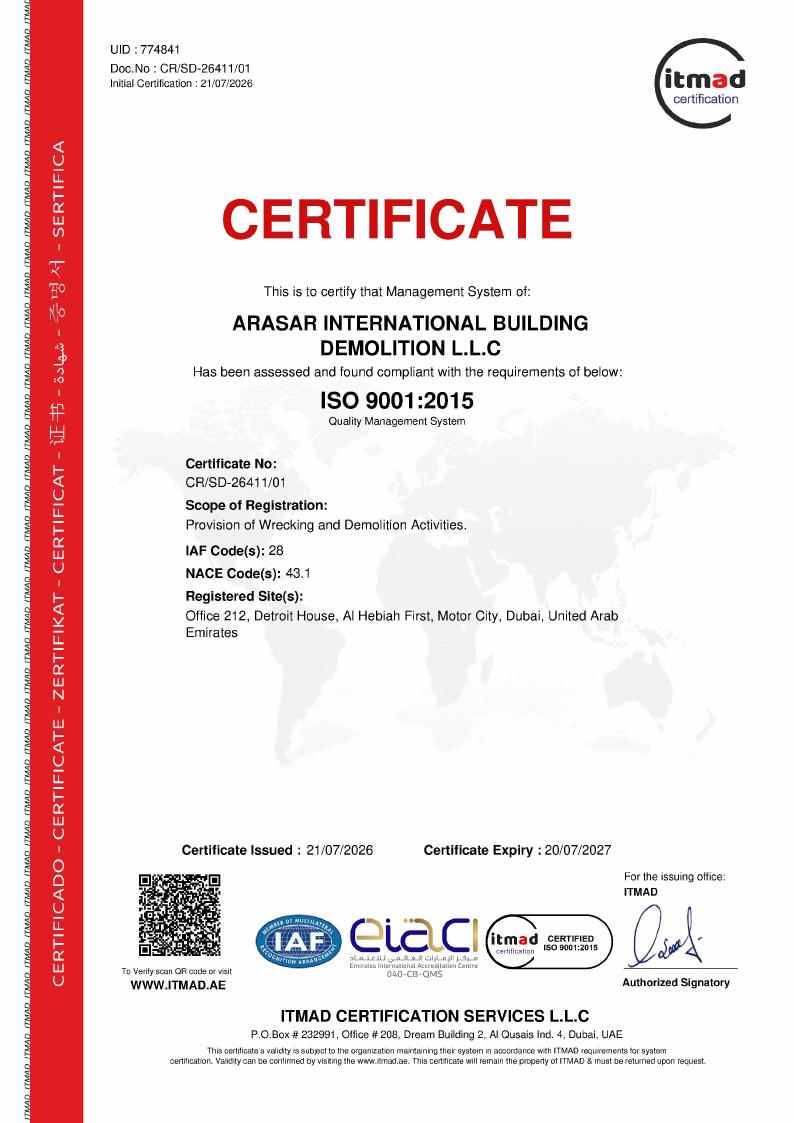 Full certificate